

10% endirim hədiyyə edin
Bu kitabı tövsiyə edin və dostunuzun alışından 0,10 ₼ əldə edin.
0+

The Fall of the House of Usher by Edgar Allan Poe is a haunting masterpiece of Gothic fiction that delves into the fragile boundaries between reality and madness, life and death, and the physical world and the realm of the supernatural. Widely regarded as one of Poe's most atmospheric and psychologically complex tales, this chilling story immerses readers in a decaying world of dread, mystery, and inevitable doom.
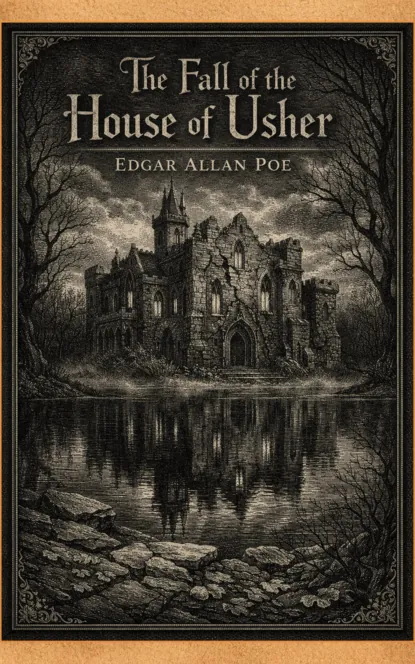
The narrative follows an unnamed narrator who arrives at the remote ancestral mansion of his childhood friend, Roderick Usher. Summoned by a desperate letter describing illness and mental distress, the narrator finds himself confronted with a bleak and crumbling estate surrounded by a dark, stagnant tarn. From the moment he beholds the mansion's fissured façade, an overwhelming sense of gloom and foreboding settles over the scene. The house itself seems alive—its decaying walls and oppressive atmosphere reflecting the fragile state of its inhabitants.
Inside the mansion reside Roderick and his twin sister, Madeline, the last surviving members of the ancient Usher lineage. Roderick suffers from acute sensitivity and a mysterious nervous disorder, while Madeline is afflicted by a strange and debilitating illness. As the narrator attempts to comfort his friend, he becomes increasingly aware of the eerie connection between the siblings and the ancestral home. The atmosphere grows heavier, and reality begins to blur with nightmare.
Poe masterfully builds suspense through vivid imagery, symbolic detail, and psychological tension. The mansion functions as more than a setting—it mirrors the internal decay of the Usher family. Themes of isolation, hereditary madness, and the inescapable weight of the past intertwine to create a sense of mounting catastrophe. Every creaking floorboard and whispering corridor amplifies the feeling that something terrible is approaching.
As the story unfolds, the line between rational explanation and supernatural influence becomes increasingly uncertain. Strange sounds echo through the halls, and an overwhelming sense of dread consumes the narrator. The unfolding events lead to a dramatic and unforgettable climax that solidifies the tale's place among the most iconic works of American Gothic literature.
What makes The Fall of the House of Usher particularly powerful is its exploration of psychological terror rather than physical horror. Poe probes the depths of fear that arise from within—the terror of losing one's sanity, the burden of inherited guilt, and the oppressive power of isolation. The story's rich symbolism, poetic language, and carefully controlled pacing create an immersive experience that lingers long after the final scene.
Dark, atmospheric, and profoundly unsettling, The Fall of the House of Usher stands as a testament to Edgar Allan Poe's genius in crafting tales of suspense and emotional intensity. It remains a timeless exploration of decay, fear, and the mysterious forces that dwell in the shadowed corners of both the mind and the world around us.