

10% endirim hədiyyə edin
Bu kitabı tövsiyə edin və dostunuzun alışından 1,71 ₼ əldə edin.
0+

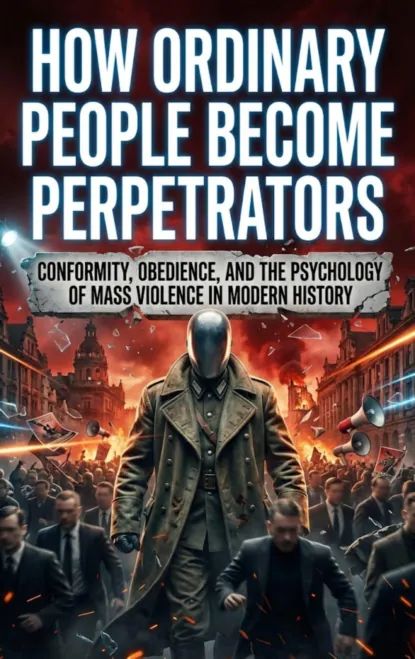
They were teachers, farmers, clerks, and neighbors. Within months—sometimes weeks—they became killers. The transformation of ordinary citizens into perpetrators of mass violence stands as one of modern history's most disturbing and consequential phenomena, yet it remains poorly understood outside academic circles.
This book investigates the documented psychological, social, and institutional processes that enabled ordinary men and women to participate in genocide, ethnic cleansing, and systematic persecution across the twentieth and twenty-first centuries. Drawing on trial records, military archives, survivor testimony, and decades of scholarly research, it examines how conformity, peer pressure, ideological conditioning, and bureaucratic distance lowered the threshold for violence in societies from Nazi Germany to Rwanda, Cambodia, and the former Yugoslavia.
Rather than seeking monsters, this account follows the evidence—revealing how group dynamics, authoritarian structures, and incremental moral compromise produced mass participation in atrocity. Understanding this process is not an exercise in exculpation but an act of historical responsibility. If ordinary people can become perpetrators under specific conditions, then those conditions can be identified, studied, and ultimately resisted. This is a book for readers who believe that honest historical reckoning is the first step toward prevention.