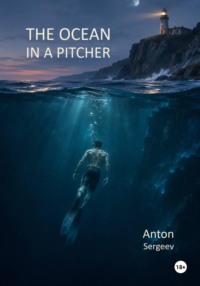
Kitabı oxu: «The Ocean in a Pitcher»
THE OCEAN IN A PITCHER
July 2025.
An anomalous heatwave had blanketed Moscow back in late June and now, by
mid-July, had scorched every living thing in the city. The air above the asphalt
shimmered in a thick, gasoline haze. The metropolis was melting, yet here, on
the fiftieth floor of Federation Tower, a sterile, artificial winter reigned.
Concealed air conditioners hummed silently. The room smelled of expensive
coffee, ozone from the glowing monitors, and icy fear.
Mark sat at the head of a long table of polished black stone. He was forty-two
years old. Ten of those years he had spent building his architectural firm. He
didnt merely draw buildings—he created ecosystems. He had gathered his team
piece by piece: brilliant engineers, madcap landscape designers, meticulous
draftsmen, one-of-a-kind programmers. They had won tenders, survived lockdowns,
weathered economic crises. Mark was used to thinking of himself as a monolith. A
concrete dam holding back any onslaught.
Yet right now, across that dam, a web of deep cracks was spreading with a
deafening roar.
Across from him sat three people. Representatives of the investment holding
company finalizing the merger. In reality, it was a new breed of hostile
takeover—clean and merciless.
A young man in an impeccable linen suit—Mark hadnt even caught his name, Artur,
he thought—was sweeping a laser pointer across a huge plasma screen with a
faint, condescending smile. Cost-optimization charts glowed on the display.
Mark Alexandrovich, you have to understand, we arent devaluing your
contribution, Arturs voice was as slick as Teflon. Your name will remain on
the masthead. As a brand. But keeping a staff of forty designers on payroll
in 2025 is, forgive me, a managerial vestige.
Artur clicked a button on his remote. A 3D model of a residential complex
appeared on the screen. Intricate, handsome, with calibrated insolation and
flawless lines.
Our Omega-4 generation neural-network architecture generates a hundred concepts
like this in three seconds, the young man announced with satisfaction.
Complete with structural strength calculations, cost estimates, and urban
landscape integration. An algorithm doesnt need sick days. An algorithm doesnt
burn out. An algorithm doesnt ask for a raise because it just had a daughter.
Were keeping you in the nominal directors chair, Mark. But were letting your
team go. Starting tomorrow, a server cluster will handle the design work. Youll
simply sign off on it. Its evolution. Surely you arent going to fight
evolution?
Mark remained silent. He stared at the 3D model on the screen and felt something
inside him snap and plummet into an abyss.
His team. Living people with whom he had pored over blueprints around the clock,
drunk cold coffee, argued until hoarse, conjuring something out of nothing. All
of it had just been zeroed out. Reduced to a mathematical margin of error. Ten
years of his life, his sleepless nights, his ruined first marriage—all of it was
worth three seconds of machine time.
And then it began.
First, sound vanished. Arturs voice receded infinitely far away, as though Mark
had suddenly been plunged to the bottom of a swimming pool. Then came the hunger
for oxygen. Mark tried to inhale, but a steel hoop clamped shut around his rib
cage. His lungs refused to take in the icy, conditioned air.
Not now. God, please, not now, flashed a panicked thought.
This wasnt his first panic attack over the past year, but it was unmistakably
the worst. The fingers resting on the table began to tremble with a fine,
sickening tremor. His heart slammed against his ribs once, twice, then broke
into a frantic, arrhythmic gallop. Three hundred beats a minute. Blood pounded
in his temples like an alarm bell.
The walls of the glass conference room began to close in. It seemed to him the
tower was toppling. That the thick glass was about to shatter, letting the
scorching, suffocating Moscow smog rush inside. Cold sweat beaded on his
forehead. He was dying. He was utterly certain his heart was about to burst,
right here, beneath the indifferent gaze of the kid in the linen suit.
Mark lowered his eyes to hide them. His phone lay on the polished table. The
screen suddenly lit up—a notification from some forgotten travel channel he had
subscribed to ages ago.
A photograph appeared on the screen.
No text. Only the black-and-white tower of an old lighthouse standing on the
very edge of a sheer, sun-scorched cliff. Beneath the lighthouse, smashing into
white spray against bare rocks, raged a dark, leaden sea. At the bottom, in
small print, ran a caption: Kyz-Aul Lighthouse. The loneliest point on the
Crimean Peninsula.
Mark stared at that black-and-white, colossal stillness. At stones that couldnt
care less about evolution, neural networks, or cost optimization. The water in
the photograph looked alive. It was calling to him.
Mark Alexandrovich? Arturs voice broke through the cotton in his ears. The
contract is on the table in front of you. We just need your signature, and were
done.
Mark slowly stood up. His legs felt like cotton, like someone elses. He didnt
pick up the pen. He didnt pick up the contract. He didnt even look at the
investors.
Mark? Where are you going?
Mark turned and walked toward the glass door. He pushed it open and stepped into
the corridor.
On the black stone table he left his work phone, the keys to his Moscow
apartment, and ten years of his life. He stepped into the high-speed elevator
and pressed the button for the underground parking garage. The lift plummeted
downward, carrying Mark fifty stories closer to the earth. The pressure shift
struck his eardrums, but Mark paid it no mind. He needed air. He needed
emptiness.
Ten minutes later, Marks black SUV burst out of the City underground garage
onto the scorching asphalt of Kutuzovsky Prospekt.
He didnt stop by home for his things. He didnt call his ex-wife. He switched
off his personal smartphone and tossed it onto the passenger seat. Turning the
climate control to minimum, he floored the gas pedal. Into the navigation system
built into the dashboard, he typed only a single word: Kyz-Aul.
Twenty hours.
Twenty hours of unbroken, hypnotic racing south along the M4 Don highway. Mark
drove the car at its limit, stopping only to fill the tank and down a double
espresso at faceless gas stations.
He was fleeing. Fleeing the glass towers, the algorithms, the feeling of his own
worthlessness. The highway blurred into a single gray ribbon. Day gave way to a
brief, sultry summer night, and then dawn broke again—dusty, crimson,
sweltering.
Once he crossed the Crimean Bridge, the landscape changed. The greenery
vanished. Endless, parched Kerch steppes stretched out before him. The road grew
worse and worse; asphalt gave way to broken concrete slabs, and then to nothing
more than a rutted dirt track winding among hills covered in dry wormwood and
feather grass.
The car jolted violently. Dust rose in a billowing column. Yet Mark never eased
off the speed. His inner engine was redlining, burning off the last remnants of
adrenaline.
At last, the dirt track pitched sharply upward and ended abruptly.
Mark slammed on the brakes. The SUV halted fifteen feet from the precipice.
He killed the engine and pushed open the door. A furious, dense nord-ost
immediately surged into the cabin—a gale-force steppe wind carrying scents of
iodine, salt, dry grass, and antiquity. The wind was so fierce that Mark had to
throw his shoulder against the door to force his way outside.
He stood at the edge of the earth. Below, beneath a hundred-foot cliff of shell
limestone, the Black Sea roared. It was neither blue nor azure. Whipped by the
storm and sand churned up from the bottom, it looked graphite, nearly black.
Enormous waves crashed against the rocks with a thunderous boom.
And to his right, rising above the cliff, stood the tower. Kyz-Aul Lighthouse.
An octagonal stone tower, painted in broad black-and-white stripes, it looked
like a beacon at the edge of the universe. No villages, no tourists, no signs of
civilization for miles around. Only steppe, cliffs, and the raging ocean.
Mark was shaking. The long drive, lack of sleep, and dehydration were taking
their toll. His head spun; black spots danced before his eyes. His mouth was so
parched his tongue felt like sandpaper. He desperately needed water.
He walked over to the squat, heavy stone house built against the base of the
lighthouse. The wind tore at his expensive office shirt, stained over the past
twenty-four hours with sweat and steppe dust.
Mark approached the massive oak door, reinforced with salt-darkened iron, and
pounded heavily with his fist.
No answer. Only the howl of the nord-ost.
He knocked again, harder, bruising his knuckles.
Hey! he shouted, though the wind instantly carried his voice off into the
steppe. Is anyone alive in there?!
Behind the door came the creak of floorboards. A heavy iron bolt clanked back,
and the door swung slowly inward.
In the doorway stood an old man.
Mark froze, breathing hard. The man before him seemed an inseparable part of
this rocky landscape. Lean, sinewy, with deeply swarthy skin cured by sun and
wind. His features unmistakably bespoke the ancient lineage of the Crimean
Karaites—a people who had lived upon these cliffs for centuries. His coarse gray
hair was cropped short, and a large, aquiline nose dominated his face. Yet most
striking of all were his eyes. Dark and deep-set, they looked at Mark without
surprise, without fear, and without hospitality. They looked with an absolute,
primeval stillness.
Water, Mark rasped, bracing one hand against the doorframe. Please. Give me
some water.
The old man silently took in the rumpled three-hundred-euro shirt, the expensive
watch on the trembling wrist, the dust-caked SUV behind him. Then, without a
word, he stepped aside, letting Mark into the dim interior.
Inside, it smelled of dried herbs, strong coffee in a copper cezve, and old,
salt-cured wood. The kitchen was ascetic: a massive hearth, a rough oak table, a
pair of stools, and fortress-thick walls that muffled the roar of the storm
outside.
Mark collapsed onto a stool at the table, cradling his throbbing head in his
hands. His inner monologue wouldnt quiet for a second.
What have I done? Why did I leave? I should have signed the contract. I should
have negotiated. Who am I now? Just an unemployed idiot in the middle of
nowhere. Im forty-two. I have nothing left. Only this damned wind outside the
window.
The old man approached the table so silently that Mark flinched.
He set a pitcher in front of Mark.
Mark lifted his inflamed, sleep-deprived eyes. The pitcher was astonishing. It
was blown from extraordinarily thick, heavy cobalt glass of a deep blue hue. The
surface of the glass was uneven, dappled with tiny dimples and trapped air
bubbles, as though the vessel had cooled not in an artisans kiln, but under the
colossal pressure of ocean depths. In the dimness of the kitchen, the pitcher
seemed to emit a faint, vibrating blue luminescence of its own.
My name is Aram, the old mans voice sounded low and steady, like the rumble
of surf.
Aram took a plain clay mug and poured water from the blue pitcher into it. The
sound of pouring water struck Mark as deafeningly loud. It jarred his frayed
nerves.
Drink, Aram said.
Mark greedily seized the mug with both trembling hands. He raised it to his lips
and took a huge, desperate gulp.
In the very same instant, a spasm clamped his throat shut. Mark choked, coughed,
and instinctively spat the remaining water onto the plank floor.
The water was vile.
It was heavy, bitter, with a sharp metallic tang. It felt as if he had swallowed
a handful of rusty nails mixed with stomach bile. Nausea surged into his throat.
What is this garbage?! Mark wheezed, wiping his mouth with the back of his
hand. Its spoiled! Theres sand and iron in it! Did you scoop it out of a
puddle?!
Arams expression didnt change. Not a muscle twitched in his weathered face.
Calmly, he picked up the very same mug from the table, where a little water
still remained at the bottom, raised it to his lips, and took a slow, even sip.
His eyes fluttered shut in pleasure.
Its ordinary rainwater, Muscovite, Aram said quietly. I collected it
yesterday on the lighthouse gallery, before the storm hit the steppe. Its
cleaner than the first snow on the mountains.
But its bitter! Im not crazy! I taste rust on my tongue!
The old man lowered himself slowly onto the stool opposite him.
This pitcher, Aram touched the blue cobalt glass with gnarled fingers, I
raised from a Genoese galley that sank off Cape Opuk hundreds of years ago.
Mark blinked uncomprehendingly.
Do you know that our sea is dead in the depths? the Karaite continued. Down
there, below two hundred meters, begins the hydrogen sulfide layer. There is no
oxygen there. No life. No decay. No time. This glass lay for three centuries in
the absolute silence of the abyss. It forgot everything that happened on the
surface. Any water that enters this pitcher is reset to zero. It loses its
memory and becomes completely empty.
Aram slid the mug back toward Mark. On the surface of the remaining drops, the
flickering flame of a lit kerosene lamp shivered in fine, nervous ripples.
Empty water has no taste of its own. It is a perfect mirror. It instantly takes
on the qualities of whoever touches it, the old mans voice sounded hypnotic,
filling the whole space of the cramped kitchen. It isnt bitter because the
water is spoiled, architect. Its bitter because the vessel it just entered is
spoiled. You.
Mark froze. He wanted to object, wanted to shout that this was the unscientific
rambling of a deranged hermit, that water couldnt possess mystical properties.
Yet the metallic taste still lingered at the root of his tongue. And that taste
was far too real. It was unmistakably like the taste of adrenaline, morning
panic, and hopelessness with which Mark had woken up every day in his glass
tower.
You brought the city with you, Aram said, looking straight into Marks eyes.
Your mind is churned up like the shallows of the Kerch Strait after a gale.
Your anger, your fear of the future, your craving to keep control over what no
longer belongs to you—all of it has risen from your bottom. When completely pure
water falls into a glass where filth is raging, the water itself becomes filth.
You drank your own stress, Mark. You drank your own fear.
The armor of the architect—accustomed to building rigid frameworks, managing
processes, and arguing with contractors—suddenly collapsed. The cracks in his
inner concrete dam converged into one, and the dam crumbled into dust.
Marks shoulders slumped. He felt not like a forty-two-year-old successful
businessman, but like a lost, broken child.
Then what do I do? His voice cracked into a pitiful whisper. How do I purify
it?
You dont, Aram smoothly took the mug from the table. You cannot purify water
by fighting it. The more you stir up the dirt, the cloudier it gets. Stop
shaking your inner vessel.
The old man turned away toward the small window, beyond which the unseen sea
roared in the gathering dusk.
Mark stared at Arams profile. The faint light of the kerosene lamp picked out
from the gloom the deep wrinkles on the old mans cheeks, the sharp line of his
jaw, the stubborn arch of his brows.
Without turning around, Aram spoke:
When your lake grows smooth, Mark, the water will become sweet again. Until
then… just sit. Listen to the nord-ost. And learn not to leave dents.
Outside, as if confirming his words, the wind slammed against the walls of
Kyz-Aul Lighthouse with renewed fury. Yet inside the stone kitchen, beside the
cobalt pitcher, for the first time in many years, an absolute, ringing silence
fell over Mark. The journey had only just begun.
CHAPTER 1. Surface Tension
The storm died at dawn.
Mark opened his eyes, and the first thing he registered was a ringing, deafening
silence. Yesterdays furious nord-ost, which had seemed determined to tear
Kyz-Aul Lighthouse and its cliff alike straight into the sea, had vanished as
though someone had thrown a breaker switch.
He was lying on a narrow wooden cot in the lighthouses guest room. His body
ached as if he had been run through a concrete mixer. It was a hangover of a
peculiar sort—a toxic hangover from burned-out adrenaline, twenty hours of
nonstop highway driving, and that monstrous panic attack in the glass conference
room of Federation Tower.
A phantom taste of rust and bile still coated his mouth. Yesterdays water from
the cobalt pitcher. The water that had absorbed his own fear.
Mark sat up slowly on the creaking mattress and looked at his wrist. The black
screen of his Apple Watch Ultra blinked mercilessly in response to the movement.
Across the watch face glowed a number: 143 missed notifications.
Two thousand kilometers away from this sun-baked room, right now, a catastrophe
was unfolding. Artur, in his immaculate linen suit, had no doubt already
initiated the unilateral seizure of assets. The holding companys lawyers were
tearing his architectural firm to pieces. The servers were passing under the
control of Omega-4 generation neural networks. His life, his status, his ego—all
of it was being dismantled in real time.
The conditioned reflex fired instantly: his pulse jumped, heaviness settled in
his chest, and his fingers reached toward the screen to open his email, start
calling, yelling, rescuing, controlling.
Just then, the door of the room swung silently ajar.
Aram stood on the threshold. Deep-set eyes, stubborn jawline. For a second, it
seemed to Mark that he was looking into an impossibly cruel mirror showing him
his own face from the future—the face of a man stripped of everything
superficial, left one-on-one with eternity.
Leave it, Aram said softly, nodding toward the glowing watch. Water does not
tolerate fuss. Were going down to the shore.
The descent to the sea proved an ordeal. The trail wound in steep switchbacks
down the sheer cliff of white shell limestone. The air hung thick with salt,
iodine, and wormwood crushed into dust that clung to his sneakers.
Aram walked ahead. The old man descended barefoot over sharp stones so smoothly
and noiselessly that he seemed not to step, but to flow from ledge to ledge like
a stream of heavy mercury. Mark, meanwhile, in his wildly expensive
limited-edition sneakers, kept stumbling, kicking up little puffs of white dust,
breathing hard and cursing his own clumsiness. In Moscow he had considered
himself in peak shape—three times a week at a premium fitness club (which was
why he always kept a spare pair of sneakers and workout clothes in his trunk),
cardio, weights. Yet here, on these wild rocks, his urban musculature felt like
useless, rigid armor that only got in the way.
They descended into a cove sheltered from the wind.
Mark froze, struck by the scene before him. Yesterday he had seen the Black Sea
as a graphite, roaring monster. Today the cove was an impossibly flat mirror of
deep sapphire. Not a single wrinkle on its surface. Not the faintest ripple. The
water was so transparent that Mark could see every stone on the bottom,
overgrown with green algae, thirty feet from shore.
Strip, Aram commanded, shrugging off his windbreaker. Beneath it lay a lean,
sinewy body crisscrossed with scars from old reef cuts.
Mark peeled off his rumpled workout clothes, creased from long storage in the
trunk, and stood in his swim trunks. The morning chill raised goosebumps on his
skin, yet the main source of cold was not the air temperature, but his own
thoughts, which kept swarming inside his head like a disturbed hive.
Aram waded in up to his waist. The surface around him scarcely stirred. He held
out a simple silicone mask without a snorkel to Mark.
What are we going to do? Mark asked, feeling the icy water sear his thighs.
Swim?
We are going to stop time, the old man replied. It is called static apnea.
Breath-holding in stillness. Your task is to lie face down in the water, relax
every muscle fiber, and simply be. Do nothing. Swim nowhere.
Mark pulled on the mask. Instantly, the Moscow overachiever woke inside him.
Breath-holding. Great. Thats pure physiology. He was accustomed to quantifying
any task. If there was a metric, it could be improved. If there was a goal, it
could be crushed by willpower.
He raised his left arm and double-tapped the screen of his Apple Watch,
activating the stopwatch. The waterproof gadget beeped, confirming it was ready.
How long do I need to hold it? Mark asked briskly, rolling his shoulders like
a boxer stepping into the ring. Two minutes? Three? Whats the standard for a
beginner?
Aram looked at him with a long, unreadable gaze. In those dark eyes, for a
fraction of a second, flickered something between pity and irony.
There are no standards, Mark. Water is not your board of directors. It doesnt
need your reports. The ocean does not accept challenges.
But Mark was no longer listening. Crisis-management mode had engaged in his
head. I lead people. I make decisions worth billions of rubles. I built a
company from scratch. Are you telling me a grown, healthy man cant hold his
breath for a measly two minutes? Push your willpower! Just endure it.
He took three deep, greedy breaths, hyperventilating his lungs just as he had
seen in YouTube videos. His chest heaved, pumping in oxygen. On the fourth
inhale, he gulped down air with force, clenched his teeth, and dropped face
first into the cold, stinging blue.
The water closed over the back of his head.
At first, things werent bad. In his peripheral vision, rounded stones lay along
the bottom. Mark floated with his arms spread like a starfish, gazing into the
underwater world.
Ten seconds.
He felt the stopwatch on his wrist ticking off the moments. It was easy.
Twenty seconds.
The cold of the water began seeping beneath his skin. Abruptly, the silence of
Pulsuz fraqment bitdi.