Kitabı oxu: «The Secret Orphan»


A division of HarperCollins Publishers
www.harpercollins.co.uk
HarperImpulse
an imprint of HarperCollinsPublishers Ltd
1 London Bridge Street
London SE1 9GF
www.harpercollins.co.uk
First published in Great Britain by HarperCollinsPublishers 2018
Copyright © Glynis Peters 2018
Cover design © HarperCollinsPublishers Ltd 2018
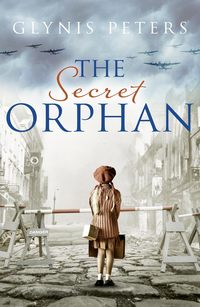
Cover photograph ©Stephen Mulcahey (girl), Fox Photos/Stringer/Getty Images (background)
Glynis Peters asserts the moral right to be identified as the author of this work.
A catalogue copy of this book is available from the British Library.
This novel is entirely a work of fiction. The names, characters and incidents portrayed in it are the work of the author’s imagination. Any resemblance to actual persons, living or dead, events or localities is entirely coincidental.
All rights reserved under International and Pan-American Copyright Conventions. By payment of the required fees, you have been granted the non-exclusive, non-transferable right to access and read the text of this e-book on screen. No part of this text may be reproduced, transmitted, down-loaded, decompiled, reverse engineered, or stored in or introduced into any information storage and retrieval system, in any form or by any means, whether electronic or mechanical, now known or hereinafter invented, without the express written permission of HarperCollins.
Source ISBN: 9780008300951
Ebook Edition © November 2018 ISBN: 9780008300944
Version: 2018-11-09
For my grandchildren
Finley – my handsome Canadian Bear Cub
Seren, and Palin, my beautiful English roses
Table of Contents
Cover
Title Page
Copyright
Dedication
Chapter 1
Chapter 2
Elenor and Rose’s Story
Chapter 3
Chapter 4
Chapter 5
Chapter 6
Chapter 7
Chapter 8
Chapter 9
Chapter 10
Chapter 11
Chapter 12
Chapter 13
Chapter 14
Chapter 15
Chapter 16
Chapter 17
Chapter 18
Chapter 19
Chapter 20
Chapter 21
Chapter 22
Chapter 23
Chapter 24
Chapter 25
Chapter 26
Chapter 27
Chapter 28
Chapter 29
Chapter 30
Chapter 31
Chapter 32
Chapter 33
Chapter 34
Chapter 35
Chapter 36
Chapter 37
1941
Chapter 38
Chapter 39
Chapter 40
Chapter 41
Chapter 42
Chapter 43
Chapter 44
Chapter 45
Chapter 46
Chapter 47
Chapter 48
Chapter 49
Chapter 50
Chapter 51
Chapter 52
1942
Chapter 53
Chapter 54
Chapter 55
Acknowledgements
About the Author
About HarperImpulse
About the Publisher
Chapter 1
14th November 1940: Coventry, England.
Boom.
Boom.
The ground vibrated with each explosion. Unfamiliar sounds surrounded Rose Sherbourne as her body received blow after blow from displaced items of furniture. She jumped when shattering glass hit falling bricks, and everything around her crashed under their weight. Boom.
Another explosion, followed by the sound of metal hitting metal, echoed out around Rose’s ears and her breath came thick and fast. Through the opening of what was once the front room, a sudden blast of hot air blew both her and her mother off their feet. Rose’s body fell against something hard and a searing pain shot through her back. For a few seconds she could not see, and she blinked, only to feel fine dust fall on her cheeks and into her eyes yet again. She wiped it away with the back of her hand and prepared herself to scrabble upright.
Boom.
A wall fell around her and, unable to move both with fear and because something was pinning down her right leg, Rose took a moment to catch her breath. Above her an intense whistling sound screamed from the sky, followed by an eerie whooshing sound. A continuous whistle followed. Rose held her breath. The sound meant only one thing; another bomb would explode within seconds and all she could do was pray it was away from her home.
Boom.
The rest of the wall fell, and she watched helplessly as brick after brick fell to the floor and her mother’s body bounced as it was forced into the air for a second time. Rose tried to move but she felt a crushing sensation, a gripping tightness across her chest. She tried to struggle free from the bricks pinning her to the ground. Her chest hurt each time she tried to cough free the dust she’d inhaled when she hit the floor.
A piercing sound screeched above and once again the planes dropped their unwelcome packages.
Thud.
Thud.
One by one.
Two by two.
Rose counted them down.
One by one.
Two by two.
She could hear return fire and engines drifting off into the distance.
The sky fell silent.
The enemy were heading back to wherever they’d come from and a stunned Rose blinked away the dust, trying to make sense of what had happened. Indescribable noises came from above and she raised her eyes skyward and saw a large bright moon taunting her with its white light. There was no roof.
Bombed. The bombs had hit her home.
Rose’s ears tingled inside and with each noise she felt a strange vibration along her jawline. With focus upon her face she sensed heat. Her cheeks burned as if it was a hot summer’s day.
There’d been a thick frost all day, but it did nothing to suppress the heat from the raging flames nearby. With relief, Rose noted they were not close enough to burn her, but they were fierce enough to make her skin tingle and sweat.
She set her mind to where she lay and which room she was in when the bombs had hit. She needed to work out an escape route before she suffocated. Fear raged through her tiny body, and a sense of loneliness overwhelmed her. She lay back with exhaustion and as she focused upon the light of the moon, questions raced around her mind.
Why hadn’t Mummy taken her to the shelter when they heard the siren sound out its warning?
Why, instead of running to safety like they usually did, did Mummy hum Rose’s favourite piano piece – Beethoven’s Moonlight Sonata – and twirl around as if showing off a new dress? She’d acted excited – strange.
With a sob, Rose remembered how her mother had screamed at her to keep playing, and how her voice had growled it out with such a fierce urgency it had frightened Rose. When Rose pleaded for them to go to the shelter her mother cuffed her around the ears.
Rose’s body started to tremble until she thought her limbs would never stop no matter how hard she tried to control them. She tried to shut out the screams she could hear around her. High pitched wails of wounded neighbours. The endless shouts and pleas from the street, the screams of other children calling for their parents. Not everyone had made it to the shelters, or if they had, the shelters had failed to protect them. Either way, Rose drew no comfort from knowing she was not alone with her struggle.
She tried to turn her head away from her mother’s contorted face. Rose knew she was dead. A tear trickled down the side of Rose’s face. She was alone.
Eventually, after what seemed like many lonely hours of trying, she released an arm and began clawing at bricks and rubble. Her cries for help were suffocated by the louder voices and frantic sounds of motor engines and fire-engine bells. Rose recoiled at the pain when she scraped her skin against the shards of shattered glass and cement, but after a while she ignored the pain of bruises and gashes in her skin out of sheer desperation to survive.
When she pulled at the last of the bricks, nothing prepared her for the moment she clambered free into devastation and despair.
The moonlight lit the path for a man as he staggered past calling out a woman’s name. He gave Rose a glance, shook his head, and she saw pouring blood running from a gaping hole in his forehead. She turned away and looked across at what she assumed was once the other side of their street but was now nothing more than rubble heaps and bonfires. Seated on an upturned tin bath, she saw a woman screaming into what looked like a ragdoll lying limp in her arms. She pleaded for it to come back to life.
Rose started towards the woman, she wanted to tell her that ragdolls weren’t real and that the woman needed to go somewhere safe, but she took no more than four steps when a noise from behind distracted her. Confused and bewildered, Rose turned around and stumbled back to the hollow she’d made for herself. She called through the opening.
‘Mummy? Mummy? It’s all right, I’m coming. I’ll help you.’
She tugged at the obstacles in her way. Furniture and twisted pipes, hissing in the night air hampered her movements. Her hands bled and burned against hot bricks and pipes. She inhaled air which dried her mouth with ash. And then, despite wanting to save her mother, she sighed with bittersweet relief when a fireman lifted her to safety.
‘Come on love, let’s get you seen to. You’re safe now, little one.’ His husky voice sounded tired.
‘Put me down. Please, go and get Mummy. She’s under the bricks. I need you to save her. Her name is Victoria.’ Rose begged and squirmed in his arms.
The fireman pulled her closer to his body, running. He paid little heed to her high-pitched pleas, and after they turned a corner, Rose never saw Stephenson Road, or her mother again.
Rose called out and tried to pound the chest of the fireman but the pain in her hands brought about only more screams.
Even the violet-perfumed, comforting arms of a plump lady from the Women’s Voluntary Service did nothing to stop the trembling and terrors which surged through her body. The woman crooned words of comfort as she carried Rose to a makeshift medical tent, and stroked her head before unhooking Rose’s gasmask from around her neck. Rose could smell the difference between her and the nurse who dressed her wounds.
The slightest hint of perfume from violets or the smell of disinfectant could still take her back to that night, even now, after seventy-eight years.
23rd November 2018
Wartime nightmares and memories often caught up with Rose during her afternoon naps, and she jerked herself awake from this latest one. She wiped away a thin layer of sweat from her top lip, and despite feeling warm, she shivered and pulled her cardigan around her. Her knees creaked as she rose from her chair and shuffled into the kitchen to make a cup of tea. As she waited for the kettle to boil, she sat and remembered telling the woman her name and calling for Elenor.
‘Elenor. I want Elenor.’
‘Hush now, little one. We’ll find Mummy and your sister. You rest now.’
‘Elenor is not my sister. She’s on the farm. Mummy’s not coming back. I want Elenor.’
She remembered hearing the woman arrange for a cot-bed and blanket to be placed in the corner of the tent whilst she sought a place for Rose to stay until the rest of her family were found. Rose had tried to tell her she had no family and her daddy had died a long time ago, but the woman told her to rest. She’d lain there, clutching the wooden-framed photograph of her and her parents. The fireman who had rescued her brought it to the tent and Rose overheard him telling the nurse it was all that was left of her home and family.
The recollection of the cries of pain that had echoed around the tent, followed by the hushed voices of men taking away those who had not survived the night, never left Rose. One vivid memory was of how she had lain on the bed praying in hope she was not alone in the world. For the first time in her life, at nearly seven years old, Rose understood the pain of war and loss. She understood Elenor’s fears when the war was first declared, fears her mother brushed aside as a young woman’s hysterics.
A sob caught in Rose’s throat. She missed Elenor, the woman who’d given up her dreams to ensure Rose had a secure future.
For the first few years of her life, Rose knew Elenor more as a big sister than as the employer of her parents; or at least the niece of her mother’s employer. She’d filled Rose’s life with fun and laughter, and even today – 23rd November 2018 – on Rose’s eighty-fifth birthday, memories of birthday party fun were only of those which Elenor had arranged. Her parents had never bothered to celebrate her special day.
Food shortages and rationing were never obstacles for Elenor, and as Rose prepared to meet her own beloved children for a birthday feast, she smiled. Their vibrancy and love of life was passed on by her, but she’d only learned to live again thanks to the love of her adoptive parents.
In her bedroom Rose pulled on her favourite navy dress; a classic style in wool with the zip front for easy wear. She reached into her jewellery box and pulled out the piece which was known as her birthday gem. It was not an expensive piece but Elenor had designed it, and to Rose it was invaluable. It was a Celtic knot with a small maple leaf sitting in the centre and a rosebud resting in the middle of the leaf. There was also a small inscription on the back, C to C to C. This inscription connected her to the places she was born and brought up. Coventry, the town of her birth, Cornwall, her childhood home until she was nearly nine, and Canada, the country which had embraced and nurtured her through her last stages as a child, into her teenage and adult years. Sixty-four years had passed since the day she unwrapped the pewter brooch from her adoptive parents, Elenor and Jackson, for her twenty-first birthday.
Today, Rose cursed her arthritic hands as she fumbled with the clasp, her swollen knuckles screaming old age. Once set in place, she stroked her finger over the fretwork and was transported back to the day she’d received it and of how her parents had created a treasure trail for her to follow, ending in Elenor’s battered suitcase.
She glanced with affection at the case which now nestled in the corner of her bedroom; she’d refused to part with it even after Elenor had died. She remembered seeing Elenor arrive in Coventry carrying it and filling it with her papers to take back to Cornwall. It still housed paper memories of lives well lived. It also housed a letter which held the truth about Rose’s past life, and why Elenor had chosen to leave Britain and move to Canada. A secret Elenor had kept for so many years. A secret that had saved Rose’s life.
Chapter 2
‘Happy birthday, Mom!’
The doors of Rose’s small home burst open and her family filled the silent room with their laughter and birthday greetings. Hugs and kisses were showered upon her in abundance. Floral bouquets were thrust at her from all angles and Rose felt the love flow from each of her children and her three grandchildren who stood before her, and her heart swelled with pride.
‘You guys will be the death of me! And you, you are stronger than you look, Abraham. Snowboarding suits you. Come champ, give me another hug, but be gentle this time.’
The room erupted with laughter and shouts of affectionate banter and teasing. She held open her arms for the youngest of her grandchildren. At six-foot tall he overshadowed her by several feet, and his body was that of an athlete. As he gave her the hug she’d demanded and gripped her tight, she had another pang of nostalgia. She thought of the last time her biological father had waved her goodbye. He’d given her no loving hug farewell, no warm memories for her to hold close on a dark night while Hitler’s bombs fell around them. She realised with a stab to her heart that he and her mother had left behind only questions and cold memories. She could never recall their love.
Her teenage granddaughters found a corner of the sofa and began clicking away on their mobile phones, capturing the moment to share with whomever would be interested. Rose forgave them their modern ways. Any form of communication was a good one. They always remembered her and brought her joy. Her grandson perched on the window ledge quietly cursing his cousins each time they snapped his way. Rose fussed around her sons and daughter, offering an enthusiastic thank you for the presents heaped upon her. They in turn delighted in her expressions of gratitude as she opened each parcel, folding the paper and ribbon with care. A habit from a lifetime of going without, Rose kept many items to recycle.
‘Thank you all. You spoil me. Now, I’m famished and could eat a …’
‘Carrot, Mother?’ Her daughter quipped. And once again laughter filled the room. The joke referred to her small appetite, and the fact she’d overeaten carrots during the war and could no longer face eating them.
The banter and laughter continued throughout the family meal in Rose’s favourite restaurant.
‘You don’t appreciate half of what you have,’ Rose said when plates were pushed aside and bellies declared full.
‘You’ve never really told us much about your time during the war, Mom,’ her eldest son responded.
Rose sipped a glass of cool water.
‘There’s too much to tell, and some things are so unpleasant they need to remain buried in the past. I’ve told you about Coventry, my home, the death of my parents. That’s one lifetime of darkness and confusion, lit only by your grandma and Pops Jackson.’
‘I wonder what Gran was like when she was young,’ her daughter said.
Rose sighed.
‘I only remember her from when I was about five, the year before the Second World War started. My memories before that are all a little foggy. I can remember her brothers died and that she returned to the farm. She loved it, but not them. They were cruel to her. She missed her boyfriend, your grandfather – Pops. I think he’d returned to Canada and left Coventry. Her Aunt Maude had died; she’d been my parents’ employer, and we stayed in her house until the night it was bombed to the ground. Then I went to live in Cornwall with Elenor, who adopted me and the rest is your history.’
Everyone around the table nodded or muttered their agreement.
‘Tell us more, Mom.’
Their corner of the restaurant was empty aside from their long table, and Rose’s family sat back in their seats indicating interest in her tale. Rose rarely opened up about her past, but she’d caught their attention. Even her granddaughters stopped taking selfies and pouting out their smiles to listen.
She looked at their faces, all eyes turned her way, waiting, anticipating what happened next in her story.
‘One of Elenor’s birthdays, I remember. My birth mother, Victoria, made a cake. She wouldn’t have bothered if I hadn’t worn her down and Aunt Maude hadn’t insisted. My mother never expressed joy over birthdays. In fact, I don’t even know when my own parents were born. How about that? Their papers disappeared in the bombings, and the only birthdays I remember are mine and your grandparents’.’
‘Ah, a cake for a birthday in the war must have cheered everyone up though, Mom’.
‘Oh, it did, and I’d learned to play a tune on the piano, and your gran sang songs with me. She had a beautiful voice. It was a very low-key party, nothing like today’s affairs, but oh the joy we shared. I remember for my birthday I used to love receiving a new pencil, or a notepad …’
‘Wow, they had notepads back then?’ her grandson asked.
‘Not the sort you know, son. The paper ones are what Gran’s referring to, not electrical.’
‘Oh, right. Really? You got excited over a paper book?’ he said.
‘I did. We had very little back than and expected very little. Each gift was gratefully received and treasured.’
‘Hence the old battered suitcase full of wrapping paper and string.’ Her daughter laughed, teasing her mother with a longstanding family joke. When Elenor had passed away, they’d found wrapping paper they’d used on gifts to her for years, all neatly folded in a drawer, and Rose wouldn’t allow them to throw it away, but instead put it with her private papers in Elenor’s case.
Rose grinned at them all. ‘You have all the gadgets, and shelves full of treats but how would you cope without them? Or what if you could no longer buy soda and chocolate?’
‘I’d die,’ her youngest granddaughter declared with a dramatic sigh.
Rose looked at them all and gave a slow nod.
‘Many did die over shortages such as soda and chocolate. Merchant ships were sunk and the service men and women died to get any types of food to us, and we still went without.’ She said. ‘I was luckier than most due to the farm in Cornwall. Thank goodness for the kind heart of Elenor, or I could have been in an orphanage and not had the pleasures of limited foodstuffs and fresh air.’
A silence fell around the table, and Rose let her words linger in their thoughts. She had no intention of lecturing them, but felt it was good to remind them of how much in the way of material goods they were lucky enough to enjoy.
‘Anyone for another drink? No? I’ll call for the bill then.’ Rose’s eldest son said, and she watched him walk away from the table. The rest of the family shuffled in their seats.
‘Thank you all for a wonderful day. I didn’t mean to make you uncomfortable with my war talk.’
‘Hey Gran, no. We mustn’t forget that stuff. We learn it at school and forget you were part of it all. Besides, we love that you enjoy everything we give you, right down to the pretty ribbon on a gift. It’s kinda cool.’
Rose looked to her daughter who shrugged her shoulders. ‘I think it was a compliment,’ she said, and Rose laughed.
Once everyone had left her apartment with promises to call and visit, Rose kicked off her shoes and placed her brooch into its box. She slipped off her dress and wrapped herself in the new fleece dressing gown, a gift from her daughter. She fetched her reading glasses and read the simple picture by picture instructions on how to use the new coffee machine – a gift from her sons – and after following each one, she eventually poured the contents of the jug into a new mug that shouted out to the world she was the best grandmother. Sitting on her favourite chair, Rose settled down for the evening. She flicked on the TV from the remote control and selected a programme about purchasing a new home. It was an imported programme from the UK. Rose loved to step inside with the presenter and listen to couples deciding whether to purchase or keep looking. Some enjoyed browsing properties abroad, making the bold step to leave all they knew behind.
Rose sipped her decaffeinated coffee and nodded her approval when one couple opted to buy a property on the coast of Cornwall. With a sigh, Rose set down her empty mug, sat back and watched the credits role as the programme came to an end. She leaned back in her chair, yawned and allowed her eyes to droop into a semi-sleep as she recalled the day they’d all left England.
The sounds rattled over her head. The large ship sitting in dock blew its horn and people shouted to one another from ship to shore. Elenor had guided her one way and then another. Jackson had hailed a porter and offloaded their bags. Rose knew they wouldn’t lose their luggage because she’d been given the important task of writing their names and new address on the labels Jackson had given her. She’d used her best handwriting and when it came to writing Canada, British Columbia, she took extra care creating neat capital C’s.
Her new father had looked over her shoulder and gave it an affectionate tap the afternoon she wrote out each label. His praise still made her smile.
‘My word, well done little Rose. Those letters are sure proud and round.’
Her new mother gave her a hug.
‘She’s a clever little button, and this mummy is extremely proud of her.’
Once the porter had loaded all labelled suitcases onto his trolley and headed towards the ship, her father had lifted her high onto his shoulders. The view was incredible. Everyone looked like ants scurrying about their business.
‘I can see for miles! There’s hundreds of children. Do you think they will play with me?’
‘I’m sure they won’t want to play with a little scallywag like you,’ her father had teased, earning himself a tug of the ears.
They came to a standstill near the entrance to the ship. Her father had explained the gangway might sway as they walked up it to the ship’s deck, but that they were perfectly safe.
‘I’ll take you to a suspension bridge in Vancouver, the gangway will give you a sense of what to expect. Now stand here my little Rose while I give your mom some last minute instructions.’
Rose knew he meant kissing. They’d done a lot of that since their wedding day. She stood patiently and looked around at other couples embracing loved ones. Soldiers, sailors, airmen, women in uniform, women in everyday dress, and women in fine outfits were all squashed together in the crowd. Class separated no one when it came to saying farewell.
She took hold of her mother’s hand and received a warm smile.
‘Elenor. I’m scared,’ she said.
‘Afraid? We’ll be fine. What an adventure. Canada, here we come. We will be all right, you know. Besides, we have Jackson for good luck.’
Rose nodded, and she looked to the man who gave her his love unreservedly, who made her laugh and made it easy for her to love another father. He reached out and tucked one of the little blonde curls of hair struggling to break free back into place behind Rose’s ear.
‘It will be fine, honey. I’ll be with you all the way. Isn’t it a big ship? I wonder which cabin will be ours.’
As the ship left shore with her horns blowing, Rose’s legs trembled, and her bladder threatened to let her down. She knew life would never be the same again. She stood between her new parents and knew whatever their reasons for leaving Tre Lodhen and moving to Lynn Valley, they were the right ones.
ELENOR AND ROSE’S STORY
Chapter 3
August 1938: Cornwall, England
Elenor traced her finger across the label attached to the side of her battered suitcase.
Miss Elenor Cardew.
Care of: Mrs M. Matthews,
Stevenson Road
Coventry.
As the bus trundled noisily out of the village and headed for Plymouth, Elenor thought back to when the telegram requesting her help – well, more a command to do as she was told – was placed before her when she sat down for supper.
‘This came. You’d best pack and be ready to leave when the bus arrives tomorrow. You must collect your train ticket.’
Her eldest brother spoke in his usual gruff, stilted tone. At eighteen, Elenor was ten years younger than her brother James, and there was never a kind word spoken, or a soft expression of love for his youngest sibling.
‘Train ticket, James?’ Elenor said.
‘Read it. I’m eating.’
Elenor pulled out the thick white paper and read her aunt’s neat handwriting, which gave strict instructions of the date and time she was to arrive in Coventry. It also informed her a one-way train ticket would be waiting for her at Plymouth station, along with instructions of changes to be made along the way.
‘We’re both in agreement. It has to be done.’
Elenor looked to her other brother, Walter; he too spoke in a dull tone with no kindness. The twins resented her birth, and both treated her with no respect.
‘You’re both in agreement? And I have no say. Aunt Maude is a tyrant. A bore. Why me?’
She flapped the letter high in the air.
‘No dramatics. Just do as you are told.’
‘Oh yes, James. And who will run this place? You?’
‘We’ll manage.’ James replied.
‘But what about harvest? You need all hands available for harvest time.’
‘The matter is closed. Do as you are told,’ Walter said and bashed his hand on the table.
With the thought of not breaking her back gathering in the hay, and chafed hands not giving her problems, Elenor suppressed a smile. In an attempt to continue her pretence of hardship, she pushed back her chair and flounced from the room, calling over her shoulder as she stomped her way upstairs.
‘I’ll leave you to wash your dishes while I go pack. You’d best get used to the extra chores, idiot.’
‘Enough of your insults, get back here!’
Elenor ignored her brother, he really was an idiot, and slammed shut her bedroom door. What was the worst he could do? He had no intention of keeping her on the farm. She’d be as dramatic as she wanted.
She read the letter again. Not thrilled about caring for her aunt, Elenor was nonetheless excited about leaving Tre Lodhen – not the farm itself, but the life she endured within its boundaries. She loved her home and would miss the Cornish countryside, but she would not miss her brothers and their cold manner towards her. Coventry offered a smidgen of excitement for a young woman wanting more from life. The village of Summercourt did not excite her, it only held her back. A mantra she’d repeat for anyone who cared to listen. Amateur dramatics in the village hall kept her from dying of boredom, and on the rare occasion she made her escape to a village event, Elenor loved nothing more than to sing, but it had been months since her brothers had allowed her time away from her chores.
The creative Elenor was suppressed at every opportunity. There was no shoulder for her to cry on or a listening ear when she needed to vent her frustrations.
On the day her mother died, Elenor’s role became obvious: she was to step into her shoes. And she did, quite literally at times. Their Aunt Maude would send a few pounds to help her family through hardship if the farm failed to produce a good crop, but it never went far and more often than not to the London Inn, their village pub. When her mother died so did any love Elenor had ever experienced. Her father had the same attitude as her brothers. He’d worked her mother to death and Elenor was made to pick up the pieces. The males in her life never gave any thought to Elenor’s needs, she never saw a penny of the money sent or earned. When it came to her birthday, she soon learnt there would be no gift and accepted it as a normal working day. The ingratitude from her family over the gifts she offered them in the past meant she no longer bothered. Christmas also came and went with the only difference being her father and brothers spent a few extra hours and coins enjoying the company of the London Inn landlord.
No amount of moaning about always having to make do with what she found in the farmhouse ever gained Elenor new clothes. Scraps of cloth filled out shoes too large and repaired handed down dungarees from her brothers. When their father died four years after her mother, the twins did nothing to change Elenor’s life. Neither showed any signs of marrying. There was no other woman in her life to help with the domestic tasks. She had no escape from the humdrum of daily life. The Depression meant nothing but hardship to Elenor, so this opportunity to enjoy a different style of living appealed to a girl of her age.
With no available money and the realisation that her farm clothes were not suitable, she spent her evening altering two of her mother’s old dresses. She’d kept them in a trunk in readiness for when they’d fit her properly. Their drab brown and greens did nothing to flatter her tanned complexion.
She imagined her aunt Maude’s stern tut-tut when she saw the brown leather belt holding her battered suitcase together. The pathetic contents would also send her into a frenzy of tutting, a sound Elenor had heard leave her aunt’s lips many times in the past. Her mother’s eldest sister was a force to be reckoned with when it came to snobbery – her father’s words, not Elenor’s. In the past the woman had scared her with her black gowns and upper-class manner, but Elenor would never dare breathe a word against the woman. When her aunt had visited the farm to nurse her sister, she’d taught Elenor a few basic rules of grace and how to conduct herself in a better manner than some of the female farmhands. Elenor often hoped her aunt would become her key to freedom, and today, in a roundabout way, she had become just that.
The following morning the bus bumped its way past fields of cattle chewing the cud in a leisurely manner. It jostled over cobbles and through narrow winding streets past small stone cottages. Clusters of women stood passing the time of day with village gossip, and men gathered around a cow on a piece of ground close to the inn. Elenor knew they’d haggle for a good price until opening time when half would be spent inside the inn sealing the deal. There was no hurry or urgency in their tasks. Slow-paced and content, the villagers laughed and frowned together. Elenor envied their ability to accept their lives. Even though she felt stifled in Summercourt, under different circumstances she might have found living there more bearable.
When the slate roof and granite walls belonging to the Methodist church came into view, Elenor shivered. The last time she’d entered those doors was to lay her father to rest. It had been a sombre affair and her brothers had been particularly obnoxious that day. Her father’s will had stated the farm be left to all three children, but the boys insisted it meant male heirs, and took no notice of her request for a wage. They stated Elenor was holding onto her part of the farm by living there rent-free.
Elenor continued to stare out of the murky glass and focused upon the trees as the bus meandered towards the edge of the village. She envied the power of the oak as it stood fast against the wind blowing in from Newquay, and she was fascinated by the way the silver birch dipped and swayed much like a group of dancers together in rhythm, with elegance and poise. They reminded her of the male versus female challenges she’d encountered over the years. One standing strong and the other bending to the will of another.
‘Clear your head, Elenor. Think pleasant thoughts.’ She muttered the words as she refocused on children playing with a kitten. Their giggles brought a smile to her face and reminded her of when she and her mother had chased three tiny farm kittens who’d found their way into the house. They’d had such fun chasing them back out into the yard.
The bus driver slowed down for a few sheep and Elenor could see Walter lumbering along in front guiding them into a new pasture. He was identifiable by his long greasy hair flapping like bird wings in the wind.
Resentment choked her. Neither of the twins had seen her off that morning. Not one had said goodbye.
Wait ’til you get home to a cold house and no meal. You’ll regret your haste to be rid of me so easily. Oh, and I’ve left you a parting gift in the sink after the way you treated me this morning!
Both men had risen at sunrise and ate the breakfast she had prepared, then left without a goodbye. Elenor looked around but could see no sign of a coin left out for her journey.
With a heavy heart she packed food, a bottle of water and a tin mug into a cloth bag.
She was so angry with her siblings she threw the dishes into the sink. She heard the chink and ping as they crashed against each other.
‘You can do your own dishes. When you’ve repaired them.’
She’d shouted the words to an absent audience.
Tears fell as she’d gathered her bags and walked away. Now, watching her brother she felt nothing.
‘Goodbye village. Sadly, I won’t be back this way again,’ Elenor whispered.
Chapter 4
A weary Elenor forced her tired legs the last few yards to her aunt’s home. Coventry city bustled around her. She jumped at buzzing noises from the car manufacturers and inhaled the delicious aroma from a bakery. It taunted her grumbling stomach. Eight hours and counting since she ate her last meagre meal.
Her suitcase bumped against her legs as she hurried along the narrow, cobbled streets. Despite her initial excitement about leaving Cornwall, the grey of the city streets closed in around her and gave Elenor a new set of anxieties. Had she been wise in leaving the farm? Maybe she should have fought harder to stay. At least when the men were at work she was left alone in peace and silence. Would that be the case here?
As the road shortened and her aunt’s home came into view, it wasn’t just the case weighing her down. Elenor trudged the last few steps trying to ignore the blisters on her feet, and once she’d arrived at the house she stood back to look at her surroundings. The house was smaller than she remembered. Smaller than the farmhouse, but larger than the terraced houses running either side of the street, the detached house sat as if at the head of the table, relishing in its glory of being the only one, yet to Elenor it lacked beauty. The house was a testament to her aunt’s snobbery. It was too symmetrical, too neat, square with bay windows either side – unlike the higgledy-piggledy medieval properties she’d walked past to get to Stephenson Road, with their beams and angular structure. As a child she remembered peeping into the six large bedrooms and shivering in the gloomy parlour with stuffed dead animals.
Elenor took a deep breath and lifted the brass door knocker gleaming in pride of place, a lion’s head. Again, Elenor had a renewed sense of foreboding.
The woman who answered the door scuttled about like a nervous mouse.
‘Welcome, Miss Cardew. I’m your aunt’s housekeeper.’
Elenor stepped inside the dark hallway.
‘Thank you. Please, call me Elenor.’
She handed her coat to the housekeeper who busied herself hanging it in a large cupboard.
‘Mrs Matthews has given instruction you will meet in the parlour before she retires for the evening, after which you will eat.’
With a nod the woman left Elenor’s side. Bemused, Elenor left her case propped against the wall, and made her way to the parlour.
After an arduous journey, the last thing Elenor wanted was to entertain her aunt with information about her brothers and the farm. She wanted to put the twins to the back of her mind.
She pushed open the door and stepped into the gloomy room. It was cold to the point of unfriendliness. She was, however, grateful to note the absence of the stuffed animal heads.
Porcelain dogs and lace cloths did nothing to brighten the drab.
Unsure as to where her aunt would sit, Elenor chose to perch on the edge of the sofa, a hard piece of furniture never designed for comfort. A mantle clock ticked and Elenor shivered. A fire in the room would not go amiss. As she debated the idea, the door swung open and her aunt entered. Elenor jumped to her feet. Far from looking frail, her aunt, dressed in her usual ill-fitting black outfit, marched straight up to Elenor and stared her in the face.
‘Didn’t get the good looks of your mother then. Sit down.’ She banged her walking stick on the floor.
Shocked, Elenor did as she was told.
‘Hello, Aunt Maude. How are you?’
‘Ill. Why do you think I sent for you, girl? I’m unwell. Not that you bumpkins from the country would ever care. Not one of you has written me. Oh no, but you accept the money swift enough. It is heartening to see you do not spend it on frivolous clothing.’
Uncomfortable that her clothing had drawn scathing comments from her aunt, Elenor adjusted her dress and sat back in the seat.
‘Don’t get too comfortable. You are here to work. To look after me. Go and fetch me a light supper. Tell that thing I employ to keep this place that she is to air my bed. I feel fatigued with entertaining guests.’
Elenor rose from the seat and fought back the urge to curtsy on her way out. She hurried down to the kitchen and welcomed the warmth of the room. It had a light airy feel due to the floor-to-ceiling cream cabinets and windows looking out onto a small garden. The housekeeper, although far from tall, was bent over a white stone sink. Elenor gave a polite cough.
‘Excuse me – oh, I’m sorry I don’t know your name. My aunt would like a light supper before she retires, and her bed aired please.’
The woman turned around and Elenor could now see she was much younger than she looked when they first met in the dark hallway. Certainly, no older than thirty.
‘Certainly, Miss Cardew. I’m Victoria Sherbourne. You’ve had a long journey, miss. You must be famished. I’ll see to your aunt and you can sit here with a cup of tea while I ask if she wants you to eat with her. Her mind changes like the wind. Pour yourself a cup whilst I prepare her tray.’ She pointed to the teapot.
As she sipped the strong tea, Elenor wondered over her role attending to her aunt’s needs. The woman didn’t look ill and appeared perfectly capable. The housekeeper interrupted her thoughts.
‘My husband enjoys her company and she tolerates his.’
‘Your husband?’
Victoria busied herself with the tray.
‘Yes, George. He’s away at the moment. As a private tutor he likes to attend various talks by other masters.’
‘I look forward to meeting him.’
Elenor noted a slight flush to Victoria’s face when she spoke about him. Pride? Embarrassment? She couldn’t tell.
Victoria returned with the tray after seeing to Aunt Maude.
‘Come, I’ll show you to your room. Your aunt has gone to bed. She asked me to tell you she will breakfast with you at eight in the morning. Unpack your case and I’ll bring you a light supper on a tray.’
‘That’s very kind of you, Victoria, but it will take me all of two minutes to unpack, and I’d rather eat downstairs in the kitchen if I’m not in your way. It’s such a cosy room.’
As they reached the bedroom, Victoria pushed open the door and set down the case and bag. Elenor had no time to take a look before Victoria closed it again.
‘We’ll eat together,’ Victoria said.
Returning to the kitchen, Victoria prepared a plate of cold meat, cheese and hard-boiled eggs and set the table for two. She carved her way through a fresh loaf of crusty bread.
‘A simple supper, but one I’m sure you can manage. It’s been a long day for you.’
Elenor stifled a yawn and helped herself to a plate of food.
‘I will sleep well tonight. Mind you, the journey was nothing like the hard work I usually have every day. I’m not used to sitting around all day, and if my aunt wants me to read to her for hours, well, I fear for my sanity.’
Victoria burst out laughing.
‘I can’t imagine your aunt having the patience to sit and listen. She will probably have you writing letters. She gets violent head pains and her eyes are not as strong as they once were. My husband used to write for her, but he is not always available.’
Shaking her head, Elenor pulled a face.
‘My handwriting isn’t the neatest. She might ask me once, but I very much doubt I’d be asked twice.’
She looked around the kitchen and saw a skipping rope and a wooden top sitting on top of a stool by the back door.
‘Do you have children, Victoria?’ she asked, pointing to the toys.
‘Yes. A daughter. Rose.’
‘Rose. A pretty name. How old is she?’
‘Five in November.’
‘How wonderful, a little girl. I take it she’s asleep, I look forward to meeting her tomorrow.’
‘She’ll be no bother. I keep her busy. I can’t have the girl running around making a nuisance of herself,’ Victoria said as she cleared away dishes.
Tiredness crept in and Elenor stretched out and gave a yawn.
‘Thank you for supper, Victoria. I look forward to meeting your family. Goodnight.’
‘Goodnight, Elenor. I’ll give you a knock in the morning.’
Victoria put the dirty dishes in the sink.
Elenor smiled as she recalled the dishes in the sink at Tre Lodhen. No doubt that evening the inn enjoyed a visit from two miserable brothers.
Chapter 5
A good night’s sleep and no pre-dawn work found Elenor in good spirits. She pulled open the drab brown curtains to let in a hint of sunshine. The rays bounced into the room and offered up an orange glow but failed to fight the drab brown and black.
The view was south-facing into the avenue with a row of trees on both sides. Her surroundings in Cornwall were far more attractive and a pang of homesickness caught hold. A tap at her door interrupted her thoughts and she opened the door to Victoria who stood holding a tray bearing a pot of tea and a china cup.
‘Morning, Victoria.’
‘Morning. Your aunt will be ready in half an hour.’ She placed the tray onto the dressing table and wiped her hands down her pale blue pinafore.
‘The bathroom is free. There is plenty of hot water.’
‘Thank you.’
Grateful for the warmth from the teacup on her hands, Elenor sipped it with speed. She ventured to the bathroom across the hall. Another cold room where her breath puffed into clouds. The large mirror steamed over the moment she ran the hot tap. A large bar of Pears soap sat on the pretty scalloped edged sink, so delicate compared to the stone affair of the farmhouse. The chilly air prevented her from lingering and she promised herself a treat of an uninterrupted bath another time.
Back in her room Elenor pulled out her fresh dress from the wardrobe. Realising the dress would not protect her fully from the chill of the day she wore her brown cardigan with a mismatched button at the bottom, which had seen better days but kept her warm. She pulled on thick brown stockings, darned at the heel and toe within an inch of their life and hooked them onto a thin, well-worn suspender belt. With a sigh, she slipped her feet into a lace-up pair of scuffed but polished, brown brogues, stuffed with the obligatory scraps of cloth to prevent slipping. Once upon a time they were her mother’s pride and joy. Sadly, Elenor could not look upon the shoes with the same enthusiasm as her mother had; to Elenor they smacked of poverty and hardship.
She released her shoulder-length hair from its night scarf and brushed life back into her red-brown curls and scooped them into a soft drop ponytail. There was no time to spend pinning them into a crown of curls as she had seen on the front page of Nash’s Pall Mall.
Once satisfied she could do no more to make herself presentable, she left the room and descended the large staircase. The house was quiet. Elenor pushed open the dining room door and was grateful for the small amount of sunshine glistening outside the large window adding a dash of colour to yet another dark and dreary room. The cow barn at the farm had more warmth and colour than her aunt’s home. At the head of the table Elenor saw the formidable figure of her aunt, who appeared deep in thought.
‘Good morning, Aunt.’
‘Sit down girl. I am in no mood for small talk and the morning has proved to be far from good. Eat. We have business with my solicitor at ten o’clock precisely.’
Her aunt made no move to look up from whatever it was on her plate holding her attention and slurped a mouthful of tea from her cup. Her puffy face reminded Elenor of the farm pigs at feeding time.
Elenor lifted the lid from a small serving dish and helped herself to a generous portion of creamy porridge. She noticed her aunt sipped at her tea and ate nothing.
‘Would you like me to serve you porridge, Aunt Maude? Or have you already eaten?’
Her aunt shook her head and pulled a face.
‘I cannot stomach food. Doctor Menzies has prescribed me stomach powders to aid my digestion, but they are useless. Sipping warm tea is all that eases the stomach pains I endure. Eat your meal. And please do so in silence, my head pain threatens to ruin my day.’
For the next twenty minutes Elenor endured the requested silence aside from the odd slurping sounds from her aunt. She gave a smile and a small sigh of relief when Victoria entered the room and began removing the dirty dishes. Elenor stood to assist her.
‘Sit down girl. Mrs Sherbourne is paid to clear the table. Go fetch my coat, hat and gloves, and dress yourself for the outdoors. We will take a short walk to Mr Andrews’ office after which we will continue on with a small list of shopping I have prepared. Ah, all done?’
Elenor did as she was told, and Victoria lifted the last of the dishes from the table.
‘Yes, Aunt.’
Elenor envied her aunt. Her black fur-collared coat was of good quality, a heavy wool. Her shoes of stout leather, also black, were smart and well-polished and it hadn’t gone unnoticed by her aunt that Elenor’s own shoes were well-worn.
‘We really must address your wardrobe. You are a walking disgrace. Victoria!’
Silence fell around them as they waited for Victoria to enter the room.
‘What size shoe do you take? Anything suitable for my niece? Find her something decent to wear from your wardrobe.’
A stunned Victoria looked from her employer to Elenor. The difference in size between them was obvious.
‘But El … Miss Cardew and I are different sizes, Mrs Matthews. Look how much taller she is to me. It won’t be easy finding her something comfortable to wear from my wardrobe. I …’
‘Very well. We will attend this meeting and I will withdraw an allowance for a new outfit. This really is inconvenient. Come along girl, before my body decides to give out on me with the worries you have brought to my door.’
Elenor gave a puzzled glance at her aunt and then looked across at Victoria who edged her way out of the room.
Brought worries to her door? She called for me!
Pulsuz fraqment bitdi.