Kitabı oxu: «Gulls»

Copyright
William Collins
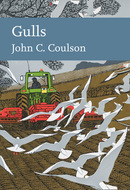
An imprint of HarperCollinsPublishers 1 London Bridge Street London SE1 9GF WilliamCollinsBooks.com This eBook edition published by William Collins in 2019 Copyright © John C. Coulson, 2019 Photographs © Individual copyright holders John C. Coulson asserts his moral right to be identified as the author of this work Cover design linocut by Robert Gillmor A catalogue record for this book is available from the British Library. All rights reserved under International and Pan-American Copyright Conventions. By payment of the required fees, you have been granted the non-exclusive, non-transferable right to access and read the text of this eBook on-screen. No part of this text may be reproduced, transmitted, downloaded, decompiled, reverse engineered, or stored in or introduced into any information storage and retrieval system, in any form or by any means, whether electronic or mechanical, now known or hereinafter invented, without the express written permission of HarperCollins Publishers. Source ISBN: 9780008201425 Ebook Edition © April 2019 ISBN: 9780008201449 Version: 2019-02-11
EDITORS
SARAH A. CORBET, SCD
DAVID STREETER, MBE, FRSB
JIM FLEGG, OBE, FIHORT
PROF. JONATHAN SILVERTOWN
PROF. BRIAN SHORT
*
The aim of this series is to interest the general
reader in the wildlife of Britain by recapturing
the enquiring spirit of the old naturalists.
The editors believe that the natural pride of
the British public in the native flora and fauna,
to which must be added concern for their
conservation, is best fostered by maintaining
a high standard of accuracy combined with
clarity of exposition in presenting the results
of modern scientific research.
Contents
Cover
Title Page
Copyright
About the Editors
Editors’ Preface
Author’s Foreword and Acknowledgements
1 An Overview of Gulls
2 Black-headed Gull
3 Mediterranean Gull
4 Common Gull (Mew Gull)
5 European Herring Gull
6 Lesser Black-backed Gull
7 Great Black-backed Gull
8 Black-legged Kittiwake
9 Yellow-legged Gull
10 Little Gull
11 Rare Gulls in Britain and Ireland
12 Methods Used to Study Gulls
13 Urban Gulls
14 Conservation, Management and Exploitation of Gulls
Appendices
Select Bibliography and Further Reading
Species Index
General Index
About the Author
About the Publisher
Editors’ Preface
GULLS ARE A FAMILY OF DISTINCTIVE and easily recognised birds that are familiar to us all, whether we live close to the sea or many miles inland, and whether we live in urban or rural surroundings. Long gone are the days when the sight of flocks of gulls overhead or in nearby fields was taken as a sure and ominous sign of storms at sea. For most of us today, birdwatchers or not, gulls are genuinely everyday birds, as common a sight as Woodpigeons (Columba palumbus) or the various members of the crow family. Other than in immature plumages (which may cause problems), the handful of commoner species are readily identifiable to those with any interest.
Seeking an expert author for a new book on gulls was a relatively easy task for the editors. Dr John Coulson was, until his retirement, Reader in Animal Ecology at the University of Durham, and has a lifetime’s experience of research into many aspects of gull (and other seabird) biology and ecology, with a particular focus on the Black-legged Kittiwake (Rissa tridactyla). He is an expert of world renown, and recipient in 1992 of the British Ornithologists’ Union’s highest accolade, the Godman-Salvin Medal, and in 1993 of the Waterbird Society’s Robert Cushman Murphy Prize.
A fulsome initial chapter introduces the gull family as a whole, including a succinct assessment of the rather complex current (worldwide) status of gull taxonomy. Things have changed dramatically since the eighteenth century, when Carl Linnaeus first established the single genus Larus, containing all the then known species! After this, the reader is treated to nine chapters – each in effect a treatise – on the regular British and Irish gulls, including the latest newcomer, the rapidly increasing and very elegant Mediterranean Gull (Ichthyaetus melanocephalus). These are followed by chapters on the rarer species; methods used in studying gulls; urban problems; and conservation, management and exploitation.
In common with many components of our fauna and flora, times have changed for gulls, and not always for the better – as the author describes. They may not universally be seen as slender-winged, elegant seabirds, and to some – especially those living in or visiting towns or cities with rooftop gull colonies – they are raucously noisy neighbours. Similarly, many seaside promenades are blighted by the menacing presence of gulls with unblinking eyes seeking scraps, often boldly. Since the late twentieth century, even conservation bodies seeking to encourage nesting terns or other seabirds have resorted to culling in an attempt to limit predatory gull activity. In the last few decades, however, Herring Gull numbers, boosted in the second half of the twentieth century by the ready feeding opportunities offered by poorly covered landfill sites, have fallen to the extent that they themselves have become of conservation concern.
Such problems, as well as the many fascinating but less nefarious aspects of our British and Irish gull populations, are dealt with in substantial detail in John Coulson’s admirably comprehensive text. This is a most noteworthy addition to the New Naturalist Library.
Author’s Foreword and Acknowledgements
MY FIRST RECOLLECTION OF GULLS was when I was about eight years old, when a maritime pilot on the Tyne told me that the gulls that frequently followed commercial ships entering the busy river were the reincarnations of past pilots, and were keeping a supportive eye on the steering of current pilots. An individual gull the pilots recognised because it called frequently was said to be the reincarnation of pilot ‘Clagger’ Purvis, who apparently had had as much to say for himself in life. Even at that age I found this story hard to believe, but the pilot was right about the frequency of gulls following both large and small vessels into the river.
My interest in birds, and particularly in gulls, developed during my school days. As a member of a small group mentored by Fred Grey, a master at South Shields High School for Boys and a person with a lifelong passion for birds, I learned much about the identification of birds during mid-morning breaks and on field trips. Through his guidance, my questioning eventually expanded from ‘What is it?’ to ‘What is it doing?’ I was also very much influenced by the Reverend Edward Armstrong’s book Bird Display and Behaviour (1942), David Lack’s The Life of the Robin (1943) and, in particular, Sir Arthur Landsborough Thomson’s Bird Migration (1936), which highlighted some of the information that could be gained by ringing birds.
While still in the sixth form at school, I wrote to Elsie Leach, who ran the national bird-ringing scheme in an honorary capacity for the British Trust for Ornithology (BTO) from a small office and a cupboard in the Natural History Museum in London, asking her how to become a ringer. I received a prompt response requesting a letter of support from an acknowledged ornithologist that I could identify birds. I obtained this from a local doctor; he had an excellent knowledge of the birds of northern Norway and I had previously been able to draw his attention to uncommon birds visiting the vicinity, which he would stop off to see while making slight detours en route to his house calls.
Having sent the recommendation to Miss Leach, I received a reply within a few days simply asking what numbers and sizes of rings I wanted. At that time, 1948, there was no training whatsoever for potential ringers, nor an age limit. Every ring used had to be recorded on a thin cardboard sheet, which took only six ring entries and was guillotined into separate strips if the ringed bird was recovered. Ringing was on a very much smaller scale in those days! I remained an active ringer for 62 years, and have seen many changes to the British ringing scheme, including the intensive training now required for those who wish to ring. I also received one of the first mist nests in the country, and had to work out for myself how to use it – all I was told was to hang it between two poles!
One day in early June 1950, Edward White (a school and university friend) and I walked along the coast to where Black-legged Kittiwakes (Rissa tridactyla, here referred to simply as Kittiwakes) were nesting on a stack called Marsden Rock and on the nearby mainland cliffs. As we walked on the beach below the colonies, we noticed that about a third of the nests on the stack contained chicks, while only one out of a hundred nests on the mainland cliffs had chicks. Two weeks later, we excluded predation as the cause of this difference, as almost all nests now contained chicks, even though those in nests on the mainland cliff tended to be smaller than those on the stack.
This brief observation started a chain of interest and speculation. Why was there this difference, which was obviously not due to predation? Our attention was drawn to Frank Fraser Darling’s book Bird Flocks and the Breeding Cycle (1938). The local public library managed to borrow a copy from another library and we were able to read about the ecologist’s idea of social stimulation, which he believed affected the timing and success of breeding in colonial birds. Some authors suggested that the differences Fraser Darling had observed in small colonies of large gulls were due to young birds breeding later than old individuals, and that more young birds were breeding in some colonies than in others. However, we failed to find any information on the effect of age on the breeding biology of gulls and very little on birds of any species.
Edward and I were both undergraduates at Durham University, and we planned to make twice-weekly visits the following year to the Kittiwake colonies at Marsden to count the numbers of nests containing chicks (counting when eggs were laid was not possible, as most nests could not be viewed from above). The difference we had observed the previous year was repeated, and we presented our first results at one of the delightfully informal annual student bird conferences held at St Hugh’s College in Oxford each January, organised by David Lack. This resulted in the opportunity to meet and engage with many knowledgeable researchers, including Niko Tinbergen, Charles Elton, Arthur Cain, Mike and Esther Cullen, ‘Mick’ Southern, Reg Moreau, David Snow, Lance Richdale and, of course, David Lack and his students.
The problem of whether the differences we found between colonies were an effect of age or social conditions required knowledge of the breeding biology of Kittiwakes of different ages and, in turn, this needed marked individuals whose ages were known. The nests on the limestone cliffs at Marsden were inaccessible, but by chance, while crossing the river Tyne on a ferry two years previously, I had noticed a few pairs of Kittiwakes nesting on the window ledges of a riverside warehouse at North Shields. At Durham University, the head of zoology, Professor J. B. Cragg, was kind enough to take an interest in our study and in 1953 he obtained access for us to the building from the owners, Smith’s Dock Co. The company actively protected the Kittiwakes and the birds were the delight of the two employees working there. We were able to reach the nests from inside the warehouse, allowing us to capture and individually mark the breeding adults and chicks. Fate was very kind to us, because the windows on the ledges used by the Kittiwakes opened inwards, and we were able to snare adults without pushing off or even disturbing the nests and their contents. Our main tool was a 60 cm length of wire, which had been used to bind a crate of oranges. We shaped one end into a crook that could be passed out of a narrow gap when the window was ajar and slipped around the leg of the adult. The Kittiwakes were not alarmed by the wire, and indeed were often curious and pecked at it. Pairs on neighbouring windowsills did not react when an individual suddenly disappeared into the ‘cliff’ to be colour-ringed. Within a few years we were able to measure the timing of laying in individuals of different ages.
The study eventually spanned more than 35 years, although there was never any guarantee that we would be able to continue it beyond a year or two at a time. At that time, long-term studies on birds were virtually unknown, the exception being that undertaken by Huijbert Kluijver on Great Tits (Parus major) in the Netherlands (which began in 1912), and it was many years before the research councils in the UK appreciated their considerable value and supported some of them.
The opportunity arose for both Edward and me to study for a PhD, but independently we came to the same opinion that a doctorate in ornithology was unlikely to lead to employment. There were only three people at that time professionally employed as ornithologists in Britain, and one of these held a post of reader in entomology! Only two universities employed ornithologists (Oxford and Aberdeen), and there was one ornithologist who worked for the Ministry of Agriculture and Fisheries. An eminent Scottish professor of zoology at that time openly stated that the study of birds and butterflies was not part of zoology, and ecology was only just starting to develop in Oxford, under the influence of Charles Elton, David Lack and Alister Hardy.
This situation was in marked contrast to the present day, when many of the now much more numerous universities have one or usually more staff researching in ornithology and ecology, while currently Natural England, the BTO, the Game and Wildlife Conservation Trust, Scottish Natural Heritage and the Royal Society for the Protection of Birds (RSPB) all employ professional ornithologists. Because of the situation in 1953, Edward and I both decided to work on entomological topics for our higher degrees, and studying Kittiwakes remained a happy hobby.
Our cooperative studies of Kittiwakes had to cease after we both completed our PhD studies. Edward went to work at a college in Freetown, Sierra Leone, and then moved to New Zealand. I went into school teaching but continued the Kittiwake studies in my spare time. Eventually, I obtained a post-doctoral fellowship from the Royal Commission for the Exhibition of 1851, and this allowed me to develop a full-time research programme of my own choice – the study of both Kittiwakes and moorland insects.
Two years later, I was offered a lectureship in zoology at Durham University, and in the following years I supervised a series of students working on seabirds and also on moorland invertebrates. Those studying seabirds included Jeff Brazendale, Brian Springett, Dick Potts, Andy Hodges, Ron Wooler, Jean Horobin, Callum Thomas, Jennifer Butterfield, Julie Porter, John Chardine, Fiona Dixon, David Jackson, Nicholas Aebischer and Jackie Fairweather, many of whom worked with me using the individually marked Kittiwakes nesting on the warehouse at North Shields from 1961 to 1990. Étienne Danchin visited from France and contributed much to Kittiwake studies during his post-doctoral year at Durham. In addition, Tom Pearson made a comprehensive study of the feeding biology of seabirds, including Kittiwakes, European Herring Gulls (Larus argentatus, here referred to simply as Herring Gulls) and Lesser Black-backed Gulls (L. fuscus) breeding on the Farne Islands, Northumberland.
Dick Potts started a PhD study on Shags (Phalocrocorax aristotelis) in 1962, and this took us to the Isle of May in Scotland’s Firth of Forth. There, we met those managing the Isle of May Bird Observatory, who were concerned about the lack of use their accommodation and facilities received during the summer. As a result, they encouraged me to start studies on the tens of thousands of Herring Gulls nesting on the island. First, Jasper Parsons, and then Neil Duncan and George Chabrzyk, developed studies on the large gull colony, while the contribution started by Margaret Emmerson was sadly curtailed by her untimely death. We continued studies on Herring Gulls for 11 years, until the major and ‘experimental’ reduction of the large gulls on the island that was carried out by the Nature Conservancy Council. Elsewhere in Britain, Niko Tinbergen had researchers working on gulls at Ravenglass and the Isle of Walney in Cumbria, and more recently several others have studied large gulls nesting on islands in south Wales.
Herring Gulls started to invade and breed in coastal towns in north-east England in the 1960s, and Pat Monaghan was the first to study these and others feeding at landfill sites in detail. We mapped the distribution and rapidly increasing numbers of large gull species nesting in urban areas throughout Britain and Ireland in 1977, building on Stanley Cramp’s initial study. Twenty years later, Susan Raven and I repeated the national census and found both a dramatic spread and increases in numbers.
Investigations on Lesser Black-backed Gulls breeding on Tarnbrook Fell were started by Neil Duncan, and later developed further by Mark O’Connor and Nick Royle, with the aim of establishing non-lethal methods to reduce the extent of the large gull colony there. From 1999 to date, my wife, Becky, and I have studied and counted Herring Gulls nesting in South Shields, Sunderland, Newcastle upon Tyne and Berwick-upon-Tweed in north-east England, and Lesser Black-backed Gulls in Dumfries in south-west Scotland.
In 1992, a new Kittiwake colony was established on the low cliffs of Coquet Island, Northumberland. With the goodwill of the RSPB, Becky and I were able to ring every chick reared there for the first 15 years of the colony’s existence, and so were able to identify the huge immigration of adults reared in other colonies as the Coquet colony rapidly grew in size.
The Natural Environmental Research Council supported my research on gulls in collaboration with their Unit of Virology, which was concerned with the possibility of viruses being carried and distributed by the birds. This involved post-doctoral studies by Neil Duncan, Callum Thomas and Jennifer Butterfield, aided by Nicholas Aebischer, David Jackson and Sarah Wanless. The range of the study was expanded from the north of England to include Scotland, with Pat Monaghan working from Glasgow University, where she had recently been appointed as a lecturer. This work subsequently led to a joint study by Susan Greig, Pat Monaghan and myself on gull feeding methods at landfill sites, which relied on video recordings and then frame-by-frame play-backs of the feeding activity of individually marked gulls of known sex and age during their mass feeding frenzies. Collaborative work was developed with the Public Health Laboratory Service over several years on the microorganisms carried by gulls (particularly Salmonella, Campylobacter and Cryptosporidium). Later, Gabriella MacKinnon and David Baines carried out studies on wintering Black-headed Gulls (Chroicocephalus ridibundus) and Common Gulls (Larus canus).
I have also had considerable exchange of ideas with gull researchers from other countries, in particular Rudi Drent and Arie Spaans in the Netherlands, and Ian Nisbet, Michael Gochfeld and Joanna Burger in the United States. In addition, I have had the pleasure of meeting very many others at international ornithological congresses.
My studies on gulls developed rapidly at Durham with the cooperation of a large series of dedicated and able researchers, well supported by a number of technicians, particularly Eric Henderson, Michael Bone and John Richardson. In addition, we received welcome financial support at different times from the Department of Scientific and Industrial Research, the Science Research Council and the Natural Environment Research Council, supporting facilities supplied by Durham University itself.
Ornithology, including the study of seabirds, has expanded considerably since 1950, and the worldwide output of publications on aspects of the biology of gulls has consequently increased at a remarkable rate. Many, but by no means all, ornithological publications are listed annually in Zoological Record, and it is remarkable how the number of scientific papers included there has increased 15-fold since 1950. Journals such as Ibis, Bird Study, Ardea, Auk and British Birds, along with several journals published in North America, have greatly increased the annual number of pages dedicated to ornithology, while many new journals have also been started. Having been an editor of three ornithological journals over a period of 40 years, I have been particularly aware of this change and, incidentally, the increasing number of papers with multiple authors. In part, this results from more cooperative studies, but perhaps also from the increasing demands (and needs) of students to publish with tenured members of staff so their work can be included in research assessments. In the 1950s and 1960s, most scientific papers in ornithology had single authorship, with a minority having two authors. Recently, however, there has been a change – for example, in a recently published issue of 24 papers in one symposium, the contributions averaged more than four authors per paper, two having 12 authors and one 13, while only two were written by a single author.
The numbers of ornithological papers published in ecological and behavioural journals has also increased dramatically. These, together with information on gulls published elsewhere, such as annual county reports and those of conservation bodies, theses, records, online reports and books, have increased almost beyond belief, to such an extent that a complete bibliography for this book would have been taken up more than fifty pages and the main text would have been littered with multiple references to data sources. In 2011, my monograph on the Kittiwake required 16 pages of bibliography for this one species alone. In dealing currently with the Herring Gull, the references consulted exceeded a thousand items, and since this book covers the information on all gulls on the British list, I found that including a complete bibliography was a major problem. Providing references in books is not new problem, however, and was one faced by both James Fisher when writing The Fulmar (New Naturalist Monograph 6) in 1952 and Niko Tinbergen in his Herring Gull’s World in 1953.
This book has had the main objective of bringing together and digesting information on the gull species that occur in Britain and Ireland, and is primarily aimed at readers who are interested in gulls but not necessarily in researching their biology in depth. In discussing this problem with the editors and others, I have been encouraged to reduce the number of references reported in the text appreciably, and instead present a Select Bibliography and Further Reading section at the end of the book (here), and listing select key studies mentioned in the text, along with other informative publications. Readers wishing for more information should be able to obtain further details from the extensive sources available on the Internet. The extent of published (and unpublished) information on gulls is now so extensive that I have had to be selective about the information presented for several species, and I have been able to include information and analyses not previously published or available to most readers.
This book is not meant as an identification guide, although some of the salient features of each species and their geographical distribution are briefly mentioned. Those wishing to identify gulls should use one of the excellent field guides available, as listed in the Select Bibliography. The world distributions of all gull species considered here have been fully described in standard identification texts, including the gull sections in volume 3 of the Birds of the Western Palaearctic and volume 3 of the Birds of the World.
It has not been possible to write this book without encountering areas of controversy, which include taxonomy, conservation, and the ability to identify some closely related species and subspecies in the field. Ornithology has thrived on controversy in the past and it will continue to do so in the future. In many cases, disagreement has led to the development of new methods of study and more in-depth investigations. In writing this book, debate has reared its head about where a species is placed in red or yellow categories of conservation concern based on a series of possible criteria, the existence of any one of which is enough to indicate that it is threatened. Some ornithologists feel that the system should be improved, and that a more critical scientific approach is needed to interpret data used to estimate the current risk of extinction of individual gull species.
For the same reason, there is no comment on climate change in this book. While there have been several claims that this has affected gulls, sound evidence in favour of such effects is currently poor and is not supported by evidence that adequately allows other possible causes to be excluded. Increasing studies have been made to estimate the potential risks to gulls from offshore wind farms and the rotating arms of the turbines. At present, most of these are based on informed speculation and such factors as the flight height of individual species and their numbers in the key areas. In the future, this problem will be investigated in more detail and the level of the perceived risk to gulls and other seabirds will be based on actual information, not just models of the situation, but the research is not yet at this stage.
In recent years, the common names of some gulls have lengthened, allegedly to avoid international confusion. Hence, the Black-legged Kittiwake, European Herring Gull, American Herring Gull and Yellow-legged Gull join the Lesser Black-backed Gull, Great Black-backed Gull, Black-headed Gull and Slender-billed Gull, which already have long names. Proposals have been made to change the Great Black-headed Gull to the shorter Pallas’s Gull, while it has been suggested that the Common Gull is changed to the Mew Gull. In this book, as mentioned earlier, Herring Gull is used for the European Herring Gull and the American Herring Gull is referred to in full. Similarly, and as mentioned above, the Black-legged Kittiwake is referred to as the Kittiwake, while its sibling species, the Red-legged Kittiwake (which is infrequently mentioned) is written out in full. In most cases this follows the vernacular English names listed in the ninth edition of ‘The Simple British List Based on a Checklist of Birds of Britain’ (2018). In general, this edition retained names already familiar to most readers.
Statistical tests are important in evaluating differences in quantitative data, but to many the presentation of these and their outcomes are but an irritation. In general, I have commented on quantitative differences only when they have been shown to be statistically significant and so are likely to be real and meaningful, although I have not given details of the tests used.
ACKNOWLEDGEMENTS
Much of the information in this book derives from two sources. Some comes from professional research, but much is the result of the activities of amateur birdwatchers who spend their spare time visiting sites where they are likely to encounter unusual bird species or birds in exceptionally large numbers, and who then send the details to local recorders or contribute to national surveys and national censuses. Over the years, the number of observers has increased markedly and systems of notifying others of the presence of unusual birds have developed. Both categories of people studying birds have swelled progressively over the past 60 years, and the information and numbers of records have increased to a remarkable extent. In addition, the methods of identifying and confirming rare species have been increasingly supported by good-quality photographs. Accompanying these trends has been a dramatic increase in the numbers of gulls ringed both in Britain and Ireland, and also elsewhere in Europe. Capturing and ringing adult gulls has increased dramatically in recent years with the development of cannon nets and more frequent visits to landfill sites by teams of ringers. All of these additional efforts are appreciated, for without them, much of the information in this book would not have been available.
I would like to acknowledge the detailed contribution of Alan Dean, both for his detailed analysis of the records of gulls in the West Midlands in England over many years and for the photographs he (and others) have so willingly contributed.
The data used in writing this book has been collected over many years and it is possible here to identify only a small number of the hundreds of contributors. The many research students I supervised and advised have all made appreciable contributions over the years, and many have since made further contributions in ornithology and science in general while holding permanent posts both in the UK and North America. I was fortunate in having such an able set of students who contributed wholeheartedly and consistently to studies often made under difficult conditions. They all willingly volunteered to take part in teamwork as required, often at the most unsocial hours of the day and in adverse weather conditions, all while advancing their own studies.
I owe a great deal to the BTO, not only for the ringing scheme they manage so efficiently, but also for the extensive data they have collected. When I first had contact with the BTO in the early 1950s, it had a small office at the top of a set of outside stairs in a side street in Oxford, with a single salaried member of staff, Dr Bruce Campbell. Here, I acknowledge the trust’s willingness to allow me to reproduce maps of ringing recoveries of gulls and to use the most recently available maps of the breeding season distribution of gulls in Britain and Ireland in 2007–11.
Many people have offered photographs for inclusion in the book, and these have all been credited in the captions. In particular, I thank Nicholas Aebischer, Pep Arcos, Rob Barrett, Colin Carter, Becky Coulson, Anthony Davison, Alan Dean, Andrew Easton, Phil Jones, John Kemp, Mark Leitch, Fred van Olphen, Daniel Oro, Mike Osborne, Viola Ross-Smith, Steven Seal, Charles Sharp, Michael Southcott, Brett Spencer, Norman Deans van Swelm, Thermos (fi.wikipedia), Dan Turner and an anonymous photographer for their photographic help and willing permission to allow their excellent images to be included in this book.
The extensive data set on British seabirds now archived and maintained by the Joint Nature Conservancy Council and readily accessible online is a valuable asset and source of information. My thanks also go to Natural England for granting a freedom of information request concerning culls and licences issued to collect gull eggs.
Help and information have been supplied by many, in particular Nicholas Aebischer, David Baines, Robert Barrett, Peter Bell, Richard Bevan, Tim Birkhead, Bill Bourne, Joanna Burger, David Cabot, Kees Camphuysen, Colin Carter, Keith Clarkson, Ian Court, J. B. Cragg, Francis Daunt, Ian Deans, Greg Douglas, Andy Douse, Steve Dudley, Tim Dunn, George Dunnet, Andrew Easton, Julie Ellis, Mike Erwin, Sheila Frazer, Bob Furness, Michael Gochfeld, Thalassa Hamilton, Gill Hartley, Scott Hatch, Martin Heubeck, Grace Hickling, Keith Houston, Jon Jonsson, Heather Kyle, Susan Lindsay, Roddy Mavor, Jim Mills, Ian Nisbet, Daniel Oro, Ian Patterson, Ray Pierotti, Jean-Marc Pons, Julie Porter, Dick Potts, Richard Procter, Chris Redfern, Jim Reid, Sam Rider, Peter Rock, Robin Sellars, Peter Shield, Robert Swann, Mike Swindells, Martin Taylor, Mike Toms, Andrew Tongue, Mike Trees, Daniel Turner, Sarah Wanless, Matt Wood, Vero Wynne-Edwards, Bernard Zonfrillo and Jan Zorgdrager. Over the years, many others have helped in studies and investigations, and I appreciate the assistance of them all.
I owe a major debt of gratitude to my wife, Becky, for the many ways she has supported and helped my gull studies, solved many computing problems, and given help in preparing and checking the text of this book.
CHAPTER 1
An Overview of Gulls
GULLS ARE CONSPICUOUS WEB-FOOTED, long-winged, medium or large seabirds that are readily recognised by the public. Adults are mainly white with shades of grey or black on the mantle and wings. Most species have black wing-tips, some have white ‘mirrors’ within the black areas, but a few species – mainly those restricted to an Arctic breeding distribution – have entirely white wing-tips. In the breeding season, adults of different species either have entirely pure white or very dark (black or brown) heads, and all revert to white heads in the autumn and winter, often with small grey marks behind the eye or grey streaking on the neck.
Gulls are widely known to the public because of their size and the habit of many species to frequent harbours, follow ships, visit landfill sites and visit outdoor areas also frequented by humans, such as seaside resorts, sports fields, beaches, rivers, picnic areas and large car parks at shopping complexes. In recent years, they have become even more familiar in parts of Europe and North America because their numbers have increased and several species have taken to nesting on buildings in urban areas. This habit of urban breeding has developed independently several times in different countries during the twentieth century and has spread rapidly. Urban nesting is now occurring in several species, and has almost certainly arisen through the marked increases in the size of gull populations, coupled with the increased protection given to them over the last century. The presence of gulls in urban areas has been given considerable adverse publicity, including reported cases of adults protecting their unfledged young by diving close to people’s heads, or of gulls snatching food from unsuspecting members of the public. Such reports have resulted in gulls, and particularly the large species, acquiring pest status in certain areas.
EVOLUTION OF GULLS
The Charadriiformes constitutes a single large and distinctive lineage of modern birds, and includes waders, skuas, auks, terns, gulls and a few apparently aberrant species such as jacanas. Although the skuas appear to be similar to gulls, current evidence – including DNA studies – suggests that their ancestry may be nearer to the auks than to gulls.
The lightly built bones of birds associated with flight are fragile and therefore do not often produce good fossil remains. As a result, the evolution of present-day birds is poorly known, and much less so than that of reptiles, fish or mammals. Fossil remains attributable to gulls are particularly scarce. Many of those that have been found have not or cannot be attributed to the presently recognised genera, and certainly not to present-day species. More recently, several fossil bones initially attributed to gulls have been found to belong to other avian groups.
Fossil bones attributed to gulls and possibly members of the genus Larus have been reported both in Europe and the USA from deposits from the Middle Miocene, 20–15 million years ago. The relationship of these fossils to modern-day gulls is unclear; fossilised bird bones are often, and perhaps uncritically, given different specific names to those of currently existing species, ignoring the fact that the bones of a present-day species vary considerably in size according to sex and locality.
TAXONOMY OF GULLS
Initially, gull species were separated and identified on the basis of plumage, skeletal structure and size. In many species, specimens from different geographical areas held in museums and private collections were often named and given subspecies status based on minor differences in size and plumage, but all too frequently this relied on small numbers collected from only a few localities. Many of these named subspecies are still used today and, while the majority are probably justified, others that were described and named many years ago should be re-evaluated using modern techniques and larger samples. Some subspecies have already been rejected on this basis, and it is likely that others will not stand critical re-examination and will also be rejected.
In other cases, some existing subspecies have been promoted to the status of a full species, as has occurred recently within the Herring Gull complex in Europe and Asia. Still others may show only gradual changes in size, structure or plumage shades over their geographical range, a concept not recognised by early taxonomists until Julian Huxley applied the term clines to these groups in 1942. Such clines have already been demonstrated for the Black-legged Kittiwake (Rissa tridactyla), the Puffin (Fratercula arctica) and the Common Guillemot (Uria aalge) breeding in the North Atlantic. Questionable subspecies of gulls still exist, and some are discussed in more detail later in this chapter.
Initially, the eighteenth-century taxonomist Carl Linnaeus placed all gulls in the genus Larus, and most species remained there in what became a very large taxon. Eventually, the two species of kittiwake were removed from Larus and placed in the genus Rissa, while the Ivory Gull was moved to the genus Pagophila (P. eburnea), Sabine’s Gull was transferred to the genus Xema (X. sabini), and Ross’s Gull was placed in the genus Rhodostethia and then, more recently, to Hydrocoloeus (H. rosea), alongside the Little Gull (H. minutus). The Swallow-tailed Gull became the sole species in the genus Creagrus (C. furcatus). These separations were not unreservedly accepted, however, and as late as 1998, Philip Chu proposed returning all gulls to a single genus, Larus. Seven years later, the intensive study of the mitochondrial DNA of many gull species made by Jean-Marc Pons, Alexandre Hassanin and Pierre-Andre Crochet (2005) moved in the opposite direction and separated gulls into nine genera, and in so doing created the new genera Chroicocephalus (with 10 species worldwide), Hydrocoloeus (with two species) and Saundersilarus (comprising only Saunders’ Gull, S. saundersi, in China). Worldwide, at least 24 gull species, especially those with white heads in the breeding season, are still retained in the large genus Larus. Aside from Saundersilarus, three other genera are composed of only one species: Creagrus, containing the Galapagos Islands’ Swallow-tailed Gull; Xema, containing the High Arctic Sabine’s Gull; and Pagophila, including the Ivory Gull, also breeding in the High Arctic. Like Hydrocoloeus, the genus Rissa also contains two species.
One of the major findings made during the in-depth investigation by Pons et al. (2005) was that the gulls that had dark heads as adults did not form a single taxonomic group, as had been suggested by studies made in the second half of the twentieth century, but were composed of three distinct groups of species. These groups were called the ‘black-headed gulls’ and placed in the genus Ichthyaetus, while ‘hooded gulls’ were separated into another new genus, Leucophaeus. The third group, including the Black-headed Gull, were called ‘masked gulls’ and were placed in the genus Chroicocephalus. To an extent, this separation of gulls with dark heads in the breeding season is supported by similar courtship behaviour within each group, as originally suggested by Niko Tinbergen and his co-workers in the 1950s and supported by more extensive recent studies.
GULL SPECIES WORLDWIDE
Currently, there are about 50 species of gulls in the world. This total has increased in recent years and will probably be increased further as improved molecular techniques are used to revise their status; even the definition of a species may be modified or revised. The uncertainty about the precise number of species reflects the fact that the gulls as a group present a taxonomic nightmare, and this has resulted in years of confusion and disagreement. For example, the American Ornithologists’ Union (AOU) considers the Herring Gull breeding in North America to be a subspecies of the European Herring Gull (Larus argentatus smithsonianus), while the British Ornithologists’ Union (BOU) regards it as a separate species, Larus smithsonianus. There is still much confusion within the extensive Herring Gull and Lesser Black-backed Gull complex of species and subspecies, particularly those occurring in Asia (see box).
Speciation concepts
The decision as to whether and under what circumstances two populations of animals that occur in different geographical areas can be considered distinct species remains a taxonomic problem, because the level of genetic difference between the two that justifies specific status is often an arbitrary decision and one that is not always universally accepted.
One major taxonomic problem relates to the Herring Gull and Lesser Black-backed Gull complex of subspecies. In 1942, the evolutionary biologist Ernst Mayr suggested that the subspecies formed a chain around the northern hemisphere, starting with the Lesser Black-backed Gull in Europe, and then further subspecies occurring eastwards through Asia, each having progressively lighter-coloured wings and leading to the American Herring Gull in North America, and finally completing the ring with the Herring Gull of western Europe. The theory is that, by the time this chain of subspecies has spread eastwards around the northern hemisphere and the ends meet up again in Europe, the Lesser Black-backed Gull and the Herring Gull are obviously separate species and interbreed only very rarely. This beautiful explanation of a series of subspecies first spreading, then part of each becoming isolated, allowing the formation of further subspecies around the northern hemisphere and eventually producing two distinct species, was widely acclaimed and has been frequently quoted in books, scientific papers and lectures on genetics and speciation.
However, the recent development and application of mitochondrial DNA techniques has shown that the American Herring Gull is not the closest relative of the European Herring Gull as was previously thought, nor did it spread eastwards historically from North America to Europe to evolve into the European Herring Gull. That said, while the fascinating concept of a ring of gull subspecies spreading around the northern hemisphere and ending with two distinct species has been discredited, it may soon, with some minor modifications, become viable again. This is because the Lesser Black-backed Gull is currently spreading from Europe to North America via Iceland and Greenland, and is beginning to breed in Canada. As such, it is establishing new end points of the chain of subspecies, this time in North America and involving the American Herring Gull.
The Iceland Gull (Larus glaucoides), which breeds in Greenland and parts of arctic Canada, has entirely white primaries and is a well-established species, but there is conflict over the status of two similar gulls, Thayer’s and Kumlien’s gulls, both of which show some black on the tips of the primaries. The AOU recognises Thayer’s Gull as a distinct species (L. thayeri), but regards Kumlien’s Gull as a subspecies of Thayer’s Gull (L. thayeri kumlieni). Within Europe, there is considerable disagreement about the status of the three forms, with some national bodies (such as those in Ireland) agreeing with the AOU classification, and others (including the BOU) considering both Thayer’s Gull and Kumlien’s gull as subspecies of the Iceland Gull (L. glaucoides thayeri and L. g. kumlieni). Yet other bodies believe that they represent three distinct species. In this book and without strong conviction on the matter, I have treated Thayer’s Gull as a distinct species but have followed the BOU and regarded Kumlien’s Gull as a subspecies of the Iceland Gull. Fortunately, most individuals that visit Britain are typical Iceland Gulls and lack any black or brown on the wing-tips.
Elsewhere in the world, birds in the Kelp Gull and Dominican Gull complex (currently all known as Larus dominicanus) are similar and obviously related to the Great Black-backed Gull (L. marinus) of the North Atlantic. They are also a taxonomic problem and currently are regarded as consisting of five geographically separated subspecies. Just as some of the former subspecies of the Herring Gull have been recognised as distinct species, some of the L. dominicanus subspecies may also be elevated to species status when more intensive genetic and ecological investigations have been completed.
CURRENT GEOGRAPHICAL RANGES
Gulls breed on all continents, with Kelp Gulls extending their southern range into Antarctica and several gull species breeding in the High Arctic. The number of gull species breeding in each 10-degree zone of latitude varies considerably, with two peaks of abundance, one in each hemisphere (Fig. 1). In the northern hemisphere, the number of species peaks between 40°N and 60°N, and in the southern hemisphere, a smaller peak occurs between 20°S and 40°S. Few gull species breed in the tropics, Antarctica or the High Arctic regions. This variation in species abundance, particularly between the two hemispheres, correlates reasonably closely with the amount of land within each latitude zone. This may offer a partial explanation as to why appreciably fewer species of gulls are found and breed in the southern hemisphere.
Few individual gull species breed over a wide range, with about 80 per cent spread over less than 20 degrees of latitude, and very few breed in both hemispheres. These patterns differ markedly from the terns, where many species breed in both the northern and southern hemispheres. A comparison of the ratio of gull and tern species breeding in different latitude zones throughout the world is shown in Fig. 2. There are more gull than tern species in only the zones north of 40°N, which begs the question as to why fewer gull species occur in the other zones. Could this be the result of competition between gulls on the one hand, and with petrels and shearwaters in the southern hemisphere?

FIG 1. The number of gull species (upper graph) and tern species (lower graph) breeding throughout the world in each zone of 10-degrees latitude. The distribution of gull species is clearly bimodal, while that for tern species peaks in the tropical zone between 30°N and 30°S. Tern data from Cabot & Nisbet (2013).

FIG 2. The ratio of the number of breeding gull species to the number of tern species in relation to zones of latitude. Gull species are more numerous than tern species only north of 40°N. The dashed line indicates equality.
The dominance of gulls over terns in temperate and arctic regions of the northern hemisphere is even greater when numbers of individuals are considered. For example, the average numbers of gulls per species breeding in Britain are very much greater than for terns. Using the figures from the national census in Britain and Ireland in 2000, there was a total of 1,810,000 breeding gulls (of seven species), but only 176,000 breeding terns (of five species), indicating a ratio of 10 gulls for every tern. Each gull species was represented by an average of seven times the average numbers for each tern species. Similar large differences are evident elsewhere in Europe and in North America.
The numerical dominance of gull species in the northern hemisphere suggests that much of their speciation occurred there. However, species of the genera Larus, Leucophaeus and Chroicocephalus breed in both the northern and southern hemispheres, indicating that in the past at least one species belonging to each genus must have spread, as breeding birds, across the equator on at least one occasion.
GULL HABITATS
The majority of gull species frequent coastal areas, marshes, rivers, estuaries and large inland lakes. Many occupy the same habitat zones used by marsh and sea terns, and in this respect they contrast markedly with shearwaters and petrels, which are pelagic. The smaller species often feed and breed inland, while the larger gulls breed mainly at coastal sites. Within the last hundred years, several species of large gulls have bred inland more frequently, a change in behaviour that has coincided with their overall increase in abundance.
Gulls breeding on the coast move only moderate distances from the shore. They are tied by relatively short incubation shifts and the need to feed their young frequently and regularly. In general, the density of gulls at sea tends to decline rapidly as the distance from shore increases, although the Kittiwake does not show this tendency in winter. Outside the breeding season, most gulls remain within daily flying distance of the shore, preferring to roost overnight on land or on sheltered coastal waters. The exception to this is when they are migrating. Only the two kittiwake species, Sabine’s Gull and Ross’s Gull, occur regularly in oceanic waters far from land throughout the long non-breeding season.
GULL SPECIES RECORDED IN BRITAIN AND IRELAND
The box is the current list of 26 species recorded in Britain and Ireland as breeding species, regular visitors or occasional vagrants. The list represents about half of all gull species in the world. Kumlien’s Gull is listed, but is retained as a subspecies of the Iceland Gull.
An approximate phylogenetic tree of the evolution of gull species recorded in Britain and Ireland (mainly based on the research by Pons and colleagues) is shown in Fig. 3 and involves eight genera. Such a representation can be only approximate, as their evolution has most likely been multi-dimensional and so cannot be presented accurately in two dimensions. There is still considerable uncertainty about the relationships between the species in the genus Larus, and no attempt is made in the order shown in Fig. 3 to indicate these, other than to suggest that the species with totally white wing-tips probably represent a distinct group.
Audouin’s Gull, which lacks a black head at any time, is placed in the same genus (Ichthyaetus) as two black-headed species on the British list (Mediterranean Gull and Great Black-headed Gull), along with three other black-headed species that occur elsewhere in the world, so its inclusion is surprising. Similarly, the Slender-billed Gull, which has a white head in all seasons, is included with the dark-headed Black-headed and Bonaparte’s gulls. However, Jean-Marc Pons in response to my query believes that ‘the dark hood is not a good character to construct evolutionary relationships because it has repeatedly been lost during the evolution of gulls’. In addition, he confirms that there is additional evidence indicating that the Black-headed and Bonaparte’s gulls should be included in the genera Ichthyaetus and Chroicocephalus, respectively.
The national censuses of gulls and other seabirds have been incredibly important and informative, and at last we have a sound knowledge of both the distribution and numbers of adults. However, we do not have a census value for numbers of immature individuals that have never bred for any of the gull species. Since immature birds may include up to five year classes (varying according to species), the numbers involved are appreciable and can be estimated only from a life table formed from survival rates obtained from detailed marking studies. Table 1 gives rough estimates of the proportion of immature gulls of the six commonest species occurring in Britain and Ireland. The figures are approximations but indicate that, by autumn, there is a large proportion (probably about 40 per cent) of individuals of every species listed that have not yet matured and bred. The proportions of immature individuals will have decreased by early spring because the mortality rate of young birds in their first year of life is usually markedly higher than that of adults, but they will still form an appreciable minority of the numbers of each species.
Gulls recorded in Britain and Ireland
| Genus Hydrocoloeus | |
| Little Gull (H. minutus) | Regular visitor, very occasional breeder |
| Ross’s Gull (H. roseus) | Vagrant |
| Genus Xema | |
| Sabine’s Gull (X. sabini) | Regular visitor, usually in small numbers |
| Genus Pagophila | |
| Ivory Gull (P. eburnea) | Vagrant |
| Genus Chroicocephalus | |
| Slender-billed Gull (C. genei) | Rare vagrant |
| Bonaparte’s Gull (C. philadelphia) | Vagrant |
| Black-headed Gull (C. ridibundus) | Abundant breeder and winter visitor |
| Genus Larus | |
| Common Gull (L. canus) | Common breeder and winter visitor |
| Ring-billed Gull (L. delawarensis) | Vagrant |
| Great Black-backed Gull (L. marinus) | Common breeder and winter visitor |
| Glaucous-winged Gull (L. glaucescens) | Vagrant |
| Glaucous Gull (L. hyperboreus) | Regular winter visitor |
| Iceland Gull (L. glaucoides) | Regular winter visitor |
| Kumlien’s Gull (L. glaucoides kumlieni) | Vagrant subspecies |
| Thayer’s Gull (L. thayeri) | Vagrant |
| European Herring Gull (L. argentatus) | Abundant breeder and winter visitor |
| American Herring Gull (L. smithsonianus) | Vagrant |
| Caspian Gull (L. cachinnans) | Currently vagrant but increasingly recorded |
| Yellow-legged Gull (L. michahellis) | Visitor and now an occasional breeder |
| Lesser Black-backed Gull (L. fuscus) | Abundant breeder |
| Slaty-backed Gull (L. schistisagus) | Vagrant |
| Genus Ichthyaetus | |
| Great Black-headed Gull or Pallas’s Gull (I. ichthyaetus) | Vagrant |
| Mediterranean Gull (I. melanocephalus) | Rapidly increasing breeder |
| Audouin’s Gull (I. audouinii) | Vagrant |
| Genus Leucophaeus | |
| Laughing Gull (L. atricilla) | Vagrant |
| Franklin’s Gull (L. pipixcan) | Vagrant |
| Genus Rissa | |
| Black-legged Kittiwake (R. tridactyla) | Abundant breeder |

FIG 3. A phylogenetic tree of the gull species that occur in Britain and Ireland. In general, the shorter the line leading from each species, the more recently that species is presumed to have arisen. This does not apply to the large genus Larus, where more work is necessary to elucidate the affinities of the different species. This diagram includes all of the genera in the world, with the exception of the genus Saundersilarus (where Saunders’s Gull, S. saundersi, is the only species) and the genus Creagrus (where the Swallow-tailed Gull, C. furcatus, is the only species), neither of which occur in Europe. The Vega Gull (L. vegae) has not been included, and its presence in Britain has yet to be confirmed, while Kumlein’s Gull is regarded as a subspecies of the Iceland Gull. Based in part on the work of Pons et al. (2005).

Table 1 also shows estimates of numbers of the six most abundant gulls in Britain and Ireland in about 2000. Again, these figures are estimates, but they indicate that for all six species combined there are about 3.2 million gulls of all ages in Britain and Ireland in the early autumn. This total is probably about 3.3 million in winter, when the numbers of departing Kittiwakes are replaced by immigrant Black-headed, Herring and Common gulls. By late spring, the winter visitors have departed and Kittiwakes have returned to their colonies, maintaining numbers at about 2.6 million just before breeding begins.
SUBSPECIES IN WESTERN EUROPE
There are only a few western European gull species that are represented by more than one subspecies. As mentioned earlier in the chapter, the Herring Gull was previously split into several named subspecies, some of which have now been elevated to species (Yellow-legged Gull, Caspian Gull). Two subspecies occur in Britain and Ireland: Larus argentatus argenteus, which breeds here; and the larger, darker L. a. argentatus, which breeds in northern Scandinavia and north-west Russia, and winters in Britain and the North Sea region. The nominate Common Gull subspecies, L. canus canus, occurs widely in western Europe, while the larger, darker subspecies L. c. heinei, which breeds in Russia, probably (based on ringing data) occurs occasionally in Britain, but is difficult to identify. In the Atlantic, the Kittiwake is represented by a single subspecies (Rissa tridactyla tridactyla); individuals are progressively larger towards the north of its range, but this gradual change does not justify separate subspecies status and is described as a cline. There are probably several other clines among gulls that are yet to be recognised, including the Black-headed Gull, Glaucous Gull and Lesser Black-backed Gull.
SURVIVAL AND LONGEVITY
Gulls are medium- to long-lived birds, with an average expectation of adult life and number of breeding years of different species ranging between four and 12 or more years. Annual adult survival rates for different species vary between 80 per cent and 92 per cent, and often vary appreciably from year to year and over longer periods of time. The annual survival rate tends to be higher in the larger gulls, which also have a longer period of immaturity. This delay in reaching breeding age in gulls appears to be associated with the time that is necessary to acquire competence in obtaining food, but why this should be longer in the large species is not evident. Ringed Herring Gulls that are nearly 35 years old have been recorded, but these represent a few extreme individuals comprising less than 1 per cent of those that reached maturity. In several gull species, the peak of mortality occurs during and just after the breeding season, when the adults are at their lowest weights during the year, suggesting that breeding is a significant stress. Data suggest that survival of gulls is usually high in winter, but the Kittiwake may be an exception, with most mortality occurring while the species is in its pelagic wintering range.
Pulsuz fraqment bitdi.